
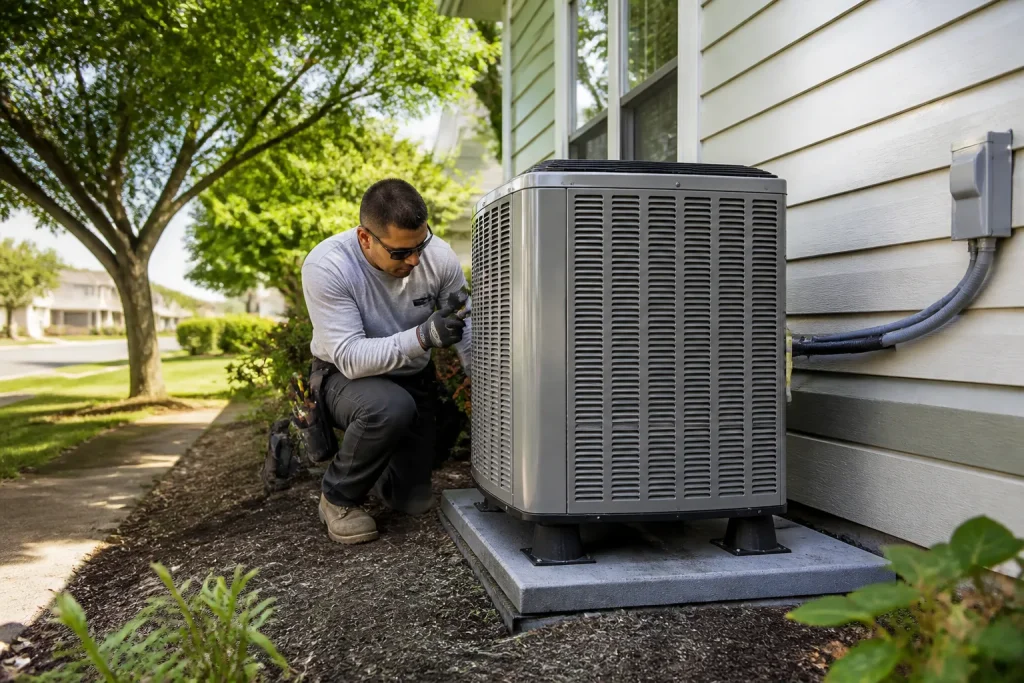
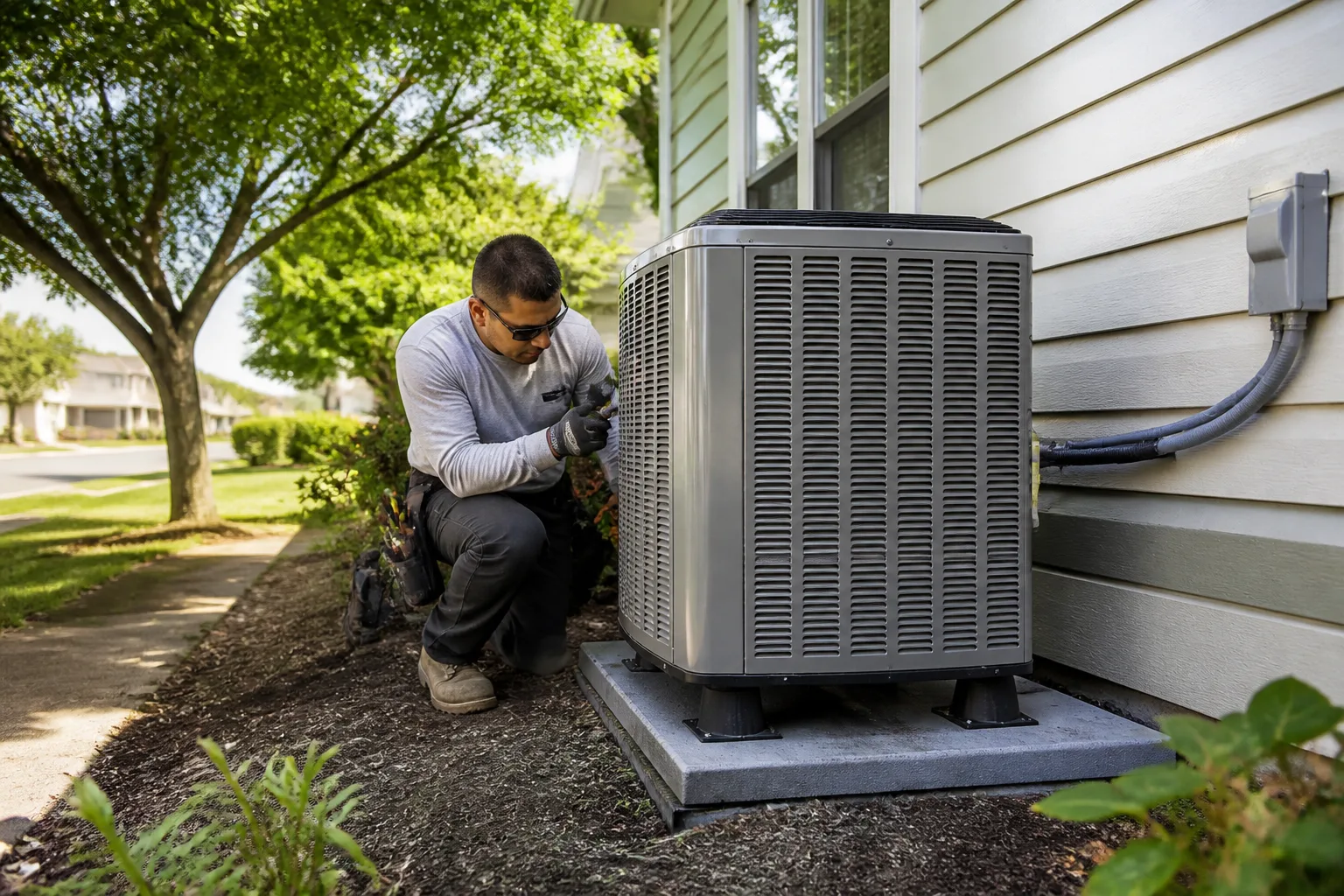
Bryant AC Installation in Sunnyvale: A Homeowner’s Guide
Two houses on the same Sunnyvale street can both have “a Bryant” and end up with very different machines. Bryant builds everything from plain builder-grade equipment up to the Evolution variable-speed line, and the gap between those tiers changes how the system actually feels and runs. Homeowners searching for Bryant AC installation often get a single SEER2 number and no real explanation of what each tier does. Here’s the plain-English version. If you’d rather skip the research and talk it through, call (833) 573-8799.
What’s the difference between Bryant Legacy, Preferred, and Evolution?
The main difference is how the system manages part-load conditions, not just the efficiency rating on the box. Sunnyvale sits in a mild climate, which means your AC spends most of its life running well below full capacity. That’s exactly where variable-speed and two-stage equipment earns its money.
Here’s how the three Bryant tiers break down in day-to-day operation:
- Legacy (single-stage): The compressor is either fully on or fully off. It cools fast, then cycles. On a hot afternoon that’s fine. On a 74-degree Sunnyvale afternoon, it’s more capacity than the house needs, starting and stopping more than it should.
- Preferred (two-stage): Runs at a lower stage most of the time and kicks into high stage only on the hottest days. Longer run times, steadier temperature, quieter operation, and better humidity control than single-stage.
- Evolution (variable-speed): The compressor and blower adjust continuously. It holds a set temperature within a much narrower band and runs at low speed for long stretches, which is what actually cuts energy use in mild weather.
SEER2 numbers tell you the efficiency of the equipment. The tier tells you how the equipment uses that efficiency. In a city like Sunnyvale, that second part matters more than most buyers realize.
Why does the premium tier pay back faster in Sunnyvale than it does elsewhere?
Because the system isn’t fighting extreme heat for most of the year. Sunnyvale averages fewer than 12 extreme heat days annually. The AC runs hundreds of hours in mild conditions for every hour it runs flat-out.
That changes the math on variable-speed equipment. Someone in the Central Valley sees the biggest efficiency gains during a handful of brutal weeks. A Sunnyvale homeowner sees them spread across the whole cooling season, because the system is modulating at 30-40% capacity for most of it. A single-stage Legacy unit can’t do that. It runs full-tilt in short bursts, which is less efficient and less comfortable at exactly the temperatures Sunnyvale actually gets.
Evolution systems typically run $1,500 – $2,500 more than the Legacy line. Plenty of national comparisons call that gap overkill for mild climates. We’d push back: in our experience, the payback logic in Sunnyvale favors the premium tier more than the national average suggests, because the equipment is optimized for the conditions Sunnyvale actually has.
Which Bryant models qualify for 2026 rebates?
The short answer: the SEER2 thresholds are what matter, and the premium tiers clear them more easily. Bryant’s Legacy and Preferred lines have model-specific SEER2 ratings, so the exact model matters as much as the tier name.
Two rebate routes are worth checking for a Sunnyvale replacement:
- PG&E residential HVAC programs: The utility sets SEER2 thresholds, and qualifying equipment earns a rebate that varies by efficiency level. Higher-SEER2 systems generally earn more.
- TECH Clean California: This program targets higher-efficiency equipment and qualified installers. Eligibility, rebate amounts, and the approved contractor list are set by the program and can change, so verify current terms before you commit to a model.
Neither rebate is automatic. The paperwork needs to be filed correctly and the model number has to actually qualify. We handle the rebate paperwork as part of a planned Bryant install, and we’ll tell you honestly whether the model you’re considering qualifies or not. If the numbers don’t work, we say so.
For context on how the install itself is scoped, see our page on AC installation.
Will a Bryant system work with my existing Carrier thermostat?
Often, yes, and it’s one of the underdiscussed advantages of going with Bryant. Bryant and Carrier are the same parent company, and the Evolution and Preferred control platforms have real compatibility with the Carrier controls that came before them. That matters if you’re upgrading from an older Carrier unit and want to keep a working thermostat or zone controller.
What this means practically:
- A Carrier-compatible thermostat may still work, but the full Evolution feature set (variable-speed staging, humidity control) usually requires the matching Bryant or Carrier communicating control.
- If the existing thermostat is old or non-communicating, the right move is usually to replace it as part of the install rather than carry forward a control that throttles the new equipment’s capabilities.
- Older wiring and control boards should be verified before the new system is ordered, not after.
We work on Carrier, Trane, Lennox, Goodman, Rheem, York, Daikin, Bryant, and American Standard, so if your existing setup is one of those, the swap is usually straightforward. If your current system is a different brand, the same-brand transition is still easy but the control compatibility needs a real look.
What does a Bryant installation warranty cover, and what should the labor warranty cover?
Two different warranties, from two different parties, and homeowners often confuse them. The Bryant manufacturer’s warranty covers the equipment. The labor warranty covers the installer’s work. They’re negotiated separately, and the second one is the one most homeowners don’t ask enough about.
What you should ask before signing:
- Equipment warranty: What’s the coverage term on the compressor, coil, and other components? Get the exact numbers in writing from the manufacturer documentation.
- Labor warranty: How long does the installer stand behind their work? It’s usually a shorter period than the equipment warranty, and it’s negotiable.
- Who honors each one: Manufacturer warranty runs through Bryant; labor warranty runs through the installer. If a part fails in year 4 but the labor warranty was 1 year, you’ll be paying for the labor.
Ask us directly and we’ll spell out both. That’s not a sales pitch, it’s just what the paperwork actually says.
When is Bryant the right call, and when should you pick something else?
Bryant is a strong choice if you want Evolution-tier variable-speed performance and you’re comfortable with the premium, or if you’re replacing an older Carrier-family system and want to keep the control ecosystem consistent. It’s also a solid pick if you want the full heating and cooling side handled by one company, since we cover Bryant furnace work alongside the AC install.
Bryant is a weaker fit if:
- You need a working AC on a tight budget and don’t care about variable-speed comfort. A Goodman or Rheem value-tier system will cool the house for less upfront.
- You want a brand with a different service network in your area. Trane and Lennox are both worth comparing at the same efficiency tier.
- Your existing ductwork or electrical can’t support premium-tier equipment without additional work. Sometimes the honest recommendation is a mid-tier unit rather than a forced upgrade.
We’ll tell you which one makes sense for your house. We’re brand-agnostic on the recommendation, which means the model with the best dealer incentive is not automatically the model you hear about first.
When should you call a pro during a Bryant install?
Bryant installation involves refrigerant handling, electrical connections, and system charging. These are not tasks to handle without proper training and licensing. If your existing system is acting up before a replacement, that’s a diagnostic issue. If it’s already failed and you’re trying to get through the season, the right move is a call, not a YouTube deep dive.
For heating-side issues, furnace repair is our other half of the job. A furnace problem in the middle of a Sunnyvale winter is a heat-safety concern, not a weekend project.
Related services in Sunnyvale: Bryant AC installation, Carrier, Trane, and Lennox system replacements, and furnace repair for every major brand.
If you’re in Sunnyvale and want a straight answer on whether a Bryant tier is worth it for your house, call (833) 573-8799. Estimates are free. We answer 24/7 with fast dispatch from 7am to 7pm.
Key Takeaways
- Bryant’s Legacy, Preferred, and Evolution tiers differ mainly in how they modulate at part load, not just in SEER2.
- Sunnyvale’s mild climate (fewer than 12 extreme heat days per year) shifts the premium-tier math in favor of variable-speed, not against it.
- 2026 PG&E and TECH Clean California rebates depend on the specific model’s SEER2 rating. Verify before purchase.
- Carrier-family thermostats often work with a new Bryant system, but full feature access usually requires matching communicating controls.
- Equipment warranty and labor warranty are separate. Ask about both, and get them in writing.
The Bottom Line
Bryant equipment is solid across the lineup. The real decision in Sunnyvale isn’t Bryant vs. another brand, it’s which Bryant tier actually fits your house and your cooling season. In a city where the system runs mostly in mild conditions, the variable-speed Evolution line often earns its premium over the long haul. The three things worth getting in writing before you sign: the specific model number, the SEER2 rating, and both warranty terms. Everything else follows.
If you’re in Sunnyvale and need help, AC Repair Sunnyvale offers free estimates. Call (833) 573-8799. We answer 24/7 with fast dispatch from 7am to 7pm.
Frequently Asked Questions
Pricing depends on the tier and model, with Evolution systems typically running $1,500 – $2,500 more than the Legacy line. The written estimate sets the final price, so get the specific model number and scope before you commit. Call (833) 573-8799 for a free estimate on your house.
For most Sunnyvale homeowners, yes, because the system spends most of the cooling season modulating in mild conditions where variable-speed equipment has a real efficiency advantage. A homeowner who wants to spend the minimum for basic cooling will get more value from a Goodman or Rheem value-tier unit. Call us and we’ll tell you which makes sense for your house.
Often, but not always. Carrier and Bryant share a parent company and the control platforms are related, but full Evolution feature access usually requires the matching communicating thermostat. Old non-communicating controls should be replaced as part of the install rather than carried forward. Call (833) 573-8799 and we’ll check your setup before ordering.
Possibly, depending on the specific model’s SEER2 rating and current program eligibility. The thresholds and approved model lists change, so verify before you buy. We handle the rebate paperwork as part of a planned install and we’ll tell you honestly whether the model qualifies. Call (833) 573-8799 to talk through your options.
Written by the team at AC Repair Sunnyvale.
Need HVAC Help?
Call AC Repair Sunnyvale - licensed & insured, here with fast help in Sunnyvale.
(833) 573-8799