
Last updated November 15, 2026
 AC repair
 Furnace & heating
 Heat pumps
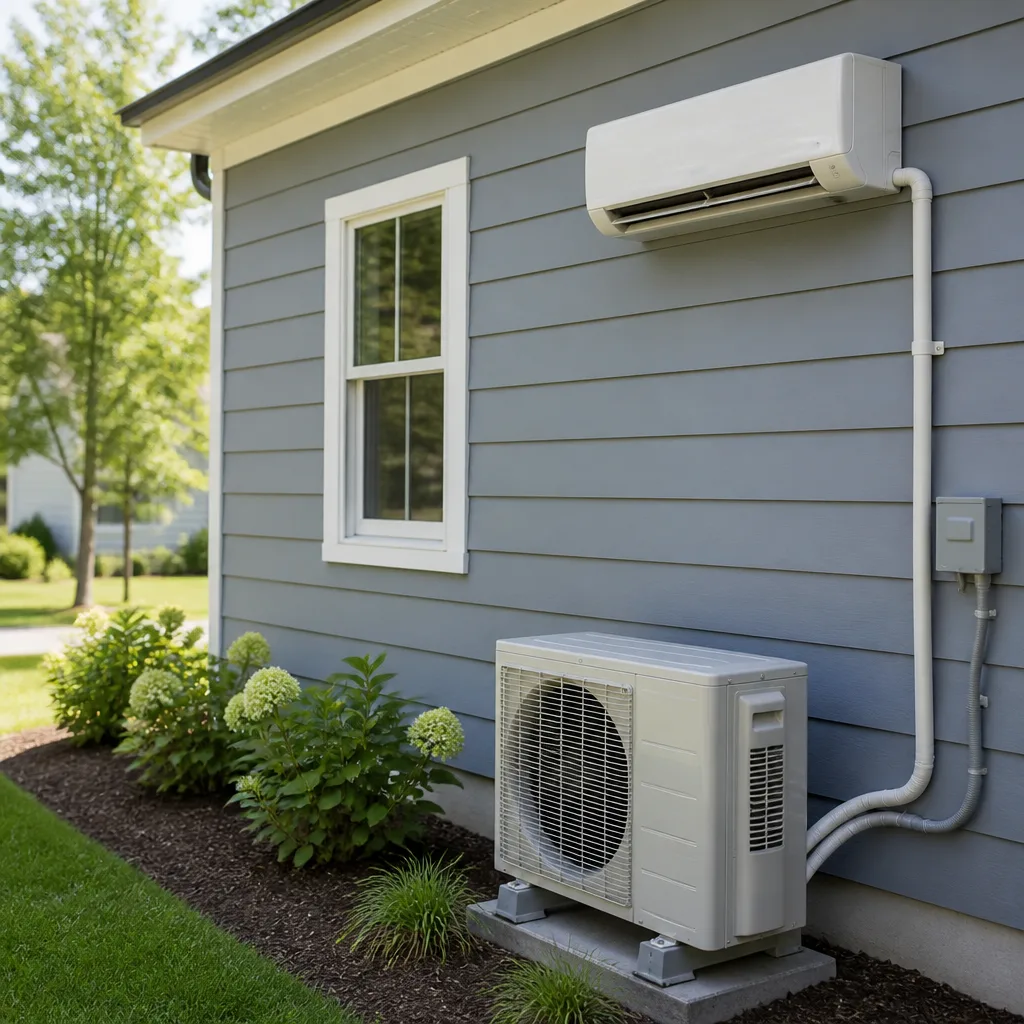 Ductless mini splits
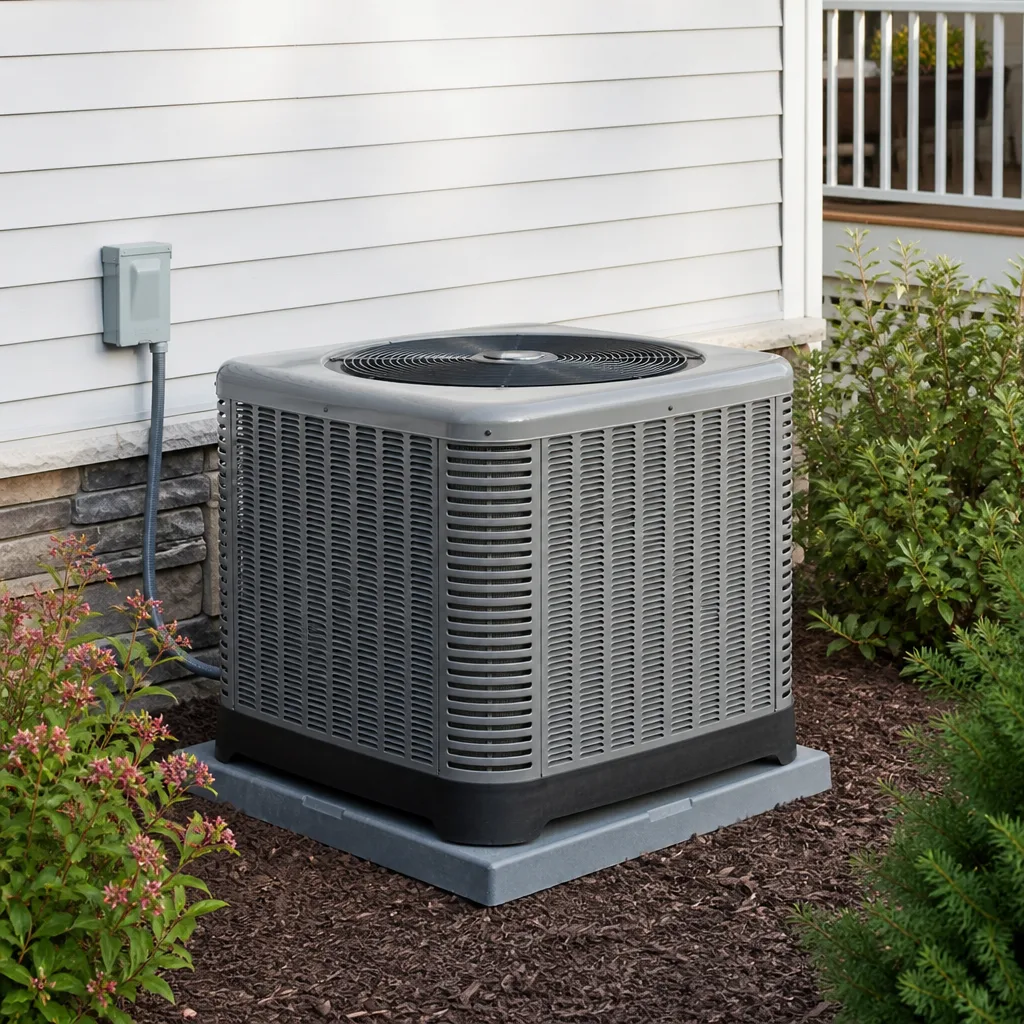 Carrier
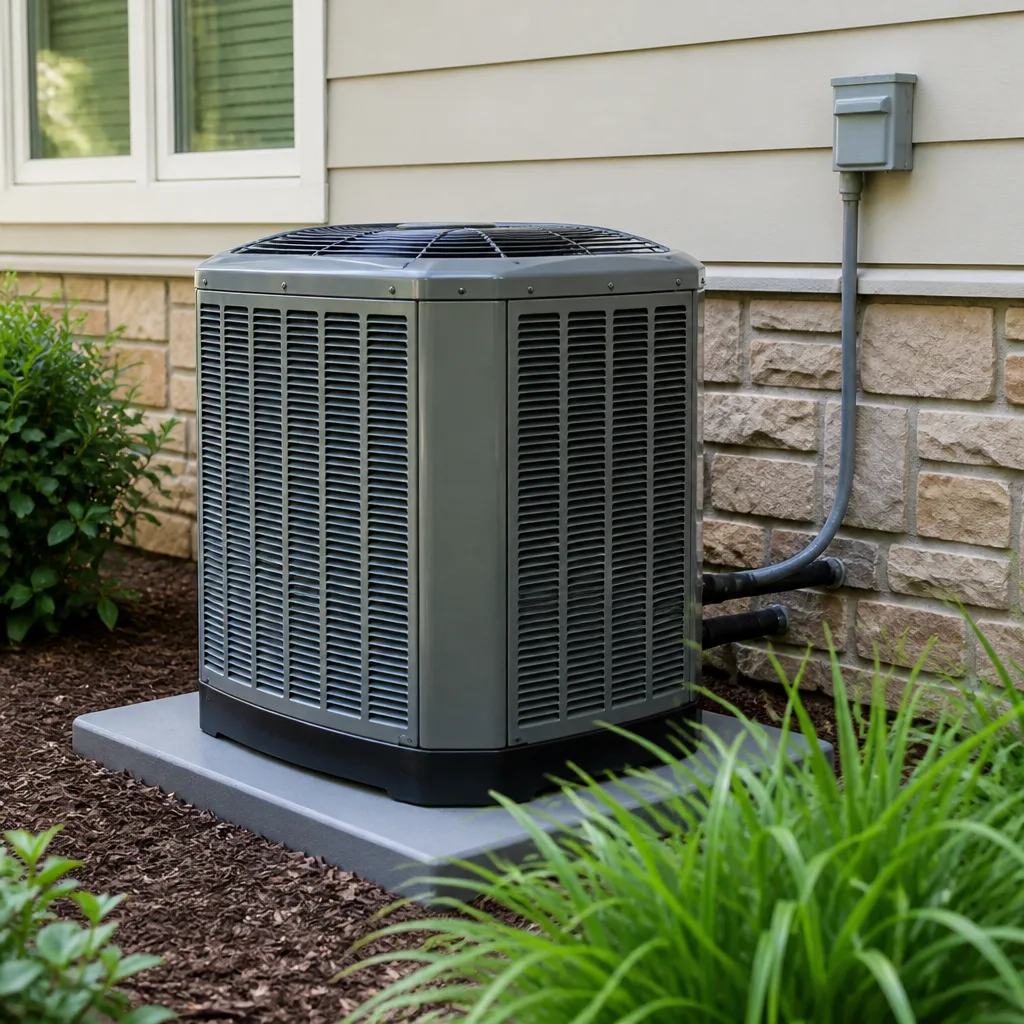 Trane
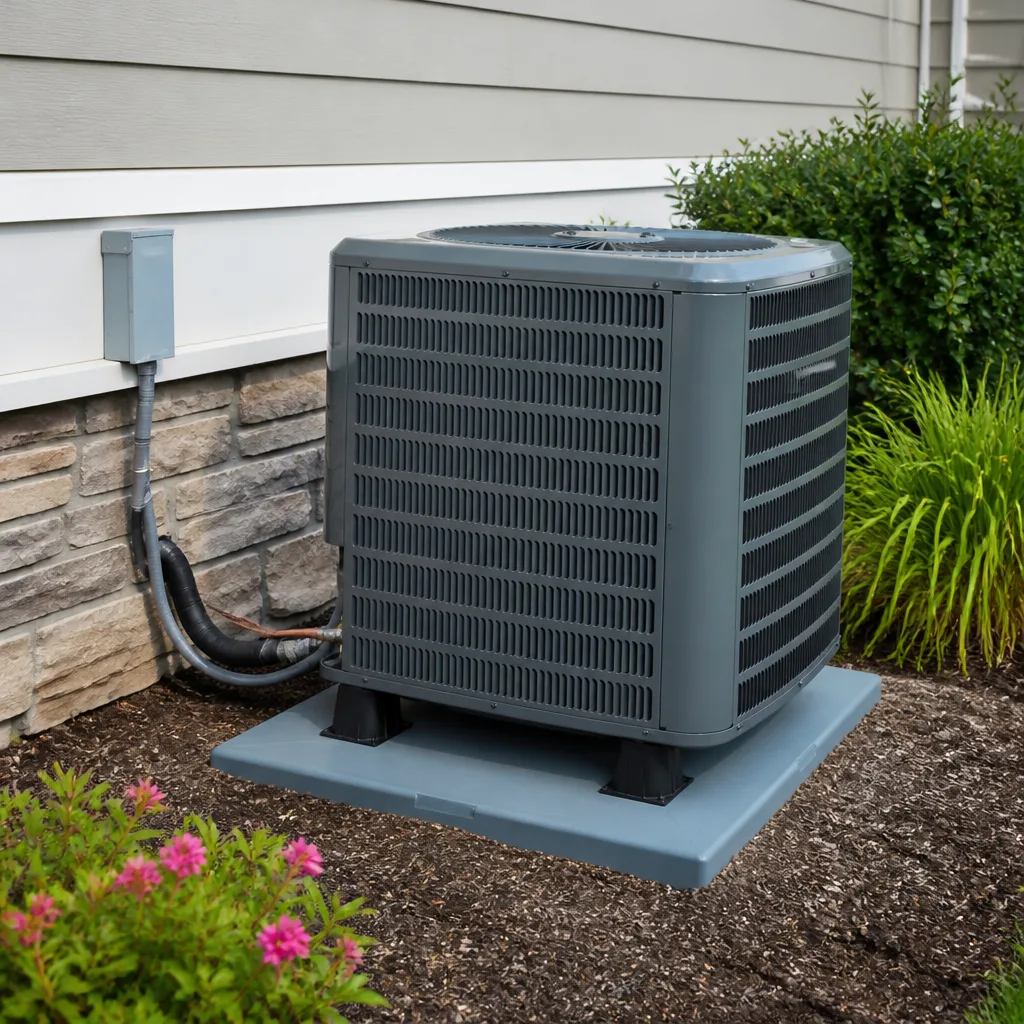 Goodman
Seasonal tune-up and full diagnostic on your Carrier, Trane, or Goodman system - readings shown to you before any repair is proposed
Diagnosis first, numbers second - you approve the repair price before a single part goes in.
Get your free estimateDIY vs Professional HVAC: The Sunnyvale Homeowner’s Decision Guide
You can legally replace your own thermostat, swap a filter, and clean your condenser coil. But the moment you touch the refrigerant circuit or pull a wire inside the air handler, you’re in California license territory, whether the system is running or not. That’s the part most homeowners don’t hear, because the DIY-versus-pro conversation usually gets framed as a skill test. It isn’t. It’s a legal authorization question, and California draws the line in specific places. This guide maps where a capable Sunnyvale homeowner can and should do their own work, where the law and the warranty draw a hard stop, and how to cut your service-call costs by pre-diagnosing before you pick up the phone.
Quick Answer
In Sunnyvale, a homeowner can legally and safely handle filter changes, thermostat replacements, condenser coil cleaning, and vent clearing without a license. Anything that touches refrigerant, connects to the electrical supply, opens the sealed refrigerant circuit, or involves gas piping to the furnace requires a licensed contractor. DIY work on those systems can void the manufacturer warranty on brands like Carrier, Trane, and Daikin, and refrigerant handling requires EPA Section 608 certification by federal law. The rest of this guide tells you exactly where that line sits and how to stay on the right side of it.
Styles & brands we work with
- AC repair
- Furnace & heating
- Heat pumps
- Ductless mini splits
- Carrier
- Trane
- Goodman
Table of Contents
- Where California Draws the Line on DIY HVAC
- The DIY Tasks That Actually Save Money
- How DIY Voids Manufacturer Warranties
- The Refrigerant Boundary: Section 608 and Why It’s Not a Gray Area
- The Electrical Boundary: Why Air Handler Wiring Is a Hard Stop
- How to Be a Smart DIY Homeowner and Cut Service Call Costs
- Repair or Replace? Reading the Signs Honestly
- Sunnyvale Climate Reality: What It Means for Your System
Where California Draws the Line on DIY HVAC
California contractor law separates work that requires a license from work that doesn’t, and HVAC sits squarely in the licensed category. The license class that matters here is C-20, Warm-Air Heating, Ventilating, and Air-Conditioning. Under state law, installing, repairing, or modifying HVAC equipment and related components is a licensed trade, and a homeowner doing that work for pay or as part of a business without a license is committing unlicensed contracting. When you do the work on your own home, the act isn’t automatically illegal in every case, but several practical walls go up the moment you cross the line.
The first wall is the permit. Most cities in California, Sunnyvale included, require a permit for HVAC installation and for some replacement work. Pulling a permit means an inspection, and an inspection means the work has to meet code. Unpermitted work discovered later can complicate a home sale, complicate insurance, and force a tear-out. The second wall is the warranty, which we cover below. The third is safety: refrigerant under pressure and 240-volt air handler wiring are not hobbyist territory.
Here’s roughly how most homeowners who call us in Sunnyvale actually sort the question:
- No license needed: filter changes, thermostat swaps, exterior coil cleaning with a garden hose, clearing supply and return vents, insulating exposed duct runs where accessible.
- License and permit typical: full AC installation, furnace replacement, ductwork changes, adding a new circuit for equipment.
- Federal certification plus state license: anything that opens the sealed refrigerant circuit, adds refrigerant, or evacuates a system.
The distinction isn’t about whether you’re handy. It’s about which regulatory bucket the task lives in. A homeowner who’s replaced three thermostats isn’t less capable than a technician with up to 10 years of experience; they’re just doing a different category of work. When the work crosses into AC installation or furnace replacement, that’s when we step in.
The DIY Tasks That Actually Save Money
Four repairs are worth doing yourself in Sunnyvale, because the labor cost a contractor charges for them is real and the risk is close to zero. Filters, thermostats, exterior condenser cleaning, and vent clearing together account for a meaningful slice of the routine maintenance a system needs. None of them require a license, none of them void a warranty, and none of them put you near the refrigerant circuit or 240-volt wiring.
1. Filter replacement
This is the highest-return DIY task on the list. A clogged filter makes the blower work harder, drops airflow across the evaporator coil, and can eventually cause the coil to ice. Change it based on how fast it loads up, not on a calendar. Homes near a busy road in Sunnyvale, or homes with pets, tend to need it more often than a low-traffic house. Check the filter label for the correct size and MERV rating; going much higher than the system was designed for can restrict airflow as badly as a dirty filter.
2. Thermostat upgrade
Swapping a thermostat is a common DIY win, with one condition: the wiring has to match. A standard thermostat uses low-voltage control wires, usually four to six, and modern smart thermostats typically need a C-wire for continuous power. Before you buy, pull the old thermostat off the wall plate and photograph the wiring. If the wire count and colors match the new unit’s requirements, and you can shut off the air handler breaker first, this is a manageable job. If you’re missing a C-wire, or the existing wiring is a mess, that’s the point to call for furnace repair evaluation, since the thermostat controls the furnace too.
3. Condenser coil cleaning
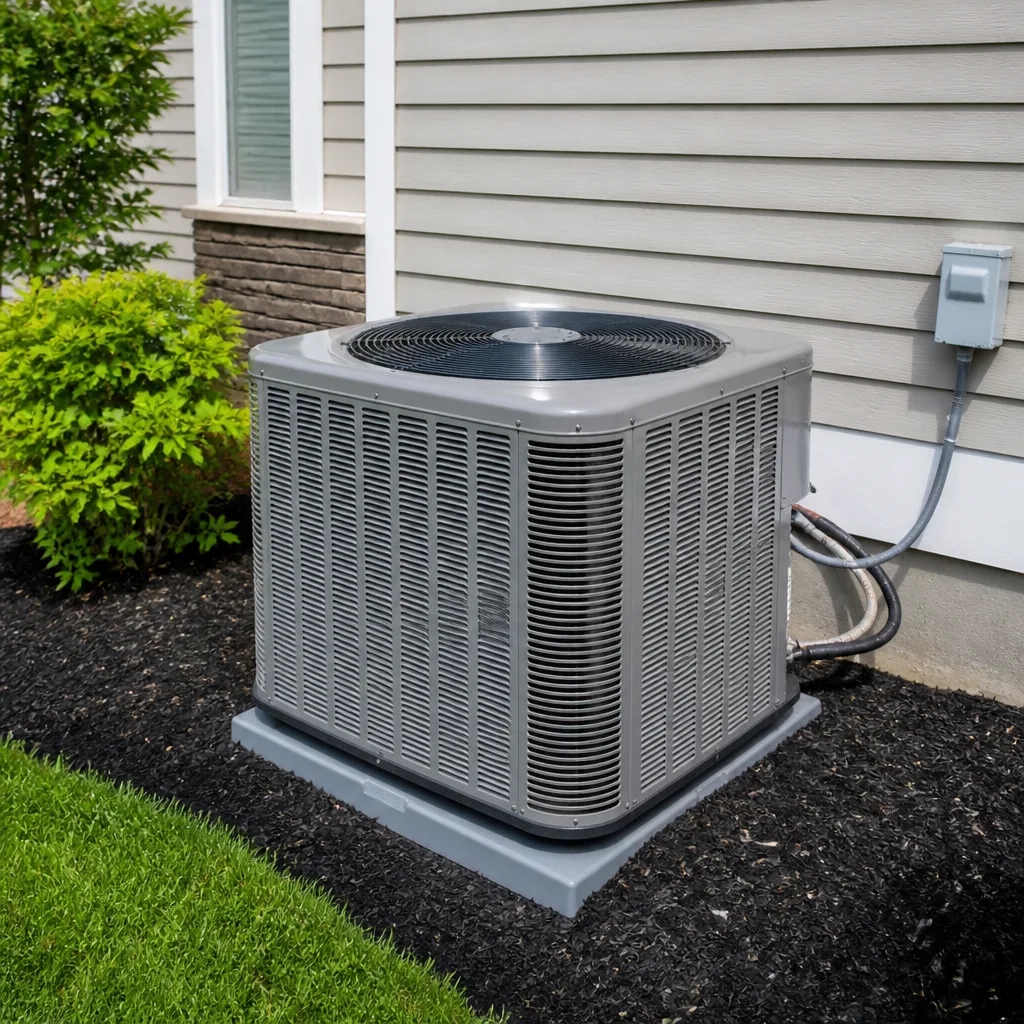
The outdoor condenser pulls air through its fins and expels heat. Leaves, grass clippings, cottonwood fluff, and general dust build up between the fins and choke that airflow. With the system off at the breaker, a garden hose from the inside out, plus a soft brush, clears most of it. Don’t use a pressure washer; the fins bend easily and a bent coil is a contractor job.
4. Vent clearing
Supply and return vents blocked by furniture, rugs, or closed dampers cut airflow and make the system work harder than it needs to. Walk through the house and confirm each register is open and unobstructed. This sounds trivial; it’s a common cause of rooms that never cool properly in Sunnyvale homes.
How DIY Voids Manufacturer Warranties
Manufacturer warranties on equipment common in Sunnyvale homes are written to protect the manufacturer, not the installer, and running through the language matters if you’re considering a DIY fix. Carrier, Trane, and Daikin all publish warranty terms that condition coverage on professional installation by a licensed contractor, and several of them also require periodic professional maintenance to keep the parts warranty valid. When a unit fails and the manufacturer’s warranty rep asks who performed the installation, an unlicensed DIY install is a common reason a claim gets denied.
What the warranty language typically turns on:
- Installation by a licensed contractor. Most manufacturer warranties state this explicitly as a condition of coverage.
- No unauthorized repairs or refrigerant additions. Self-added refrigerant or repairs with uncertified parts are a common exclusion.
- Records of maintenance. Some brands condition the full parts warranty on documented annual service; DIY doesn’t generate that record.
- Proof of purchase and serial registration. Register the unit, and keep the paperwork. Even a professional install can fall out of warranty coverage if the equipment isn’t registered.
Daikin and Bryant, both widely installed in Sunnyvale, publish similar language: licensed installation and, in some cases, professional maintenance as conditions of the full warranty. The practical upshot is that a clean install from a licensed contractor pays for itself in warranty coverage if the compressor fails in year four. That’s the point where brand knowledge matters, which is why we work across nine brands: Carrier, Trane, Lennox, Goodman, Rheem, York, Daikin, Bryant, and American Standard. Whether your system is a premium Trane or a value-tier Goodman, we know the warranty terms well enough to tell you what’s covered.
The Refrigerant Boundary: Section 608 and Why It’s Not a Gray Area
Opening the refrigerant circuit, adding refrigerant, or recovering refrigerant requires EPA Section 608 certification under the Clean Air Act, regardless of who you are. That’s federal law and it applies to a homeowner working on their own system. There’s no homeowner exemption. This is not a gray area of interpretation: it’s a certification requirement built around the fact that refrigerant is a controlled substance with environmental handling rules.
The practical consequences of ignoring the boundary:
- Refrigerant released into the atmosphere during a DIY repair is a federal violation of the venting prohibition.
- A system that loses refrigerant through a botched repair has to be evacuated, pressure-tested, and recharged by a certified technician anyway, so the money you tried to save goes to fixing the original repair.
- Most manufacturer warranties exclude damage from unauthorized refrigerant work. The parts you break aren’t covered.
- Refrigerant under pressure can cause serious injury. Cold burns and pressurized discharge are real risks; the safety caveat isn’t rhetorical.
If a system is low on refrigerant, the correct professional response is to find and fix the leak before recharging, then charge to the manufacturer’s specified weight. That’s not a sequence a homeowner can complete without certification and gauges. If your AC won’t cool and you suspect a refrigerant issue, the right move is to stop and call a licensed technician. We handle both the cooling side and the heating side; furnace repair and ac installation both run through the same team, so one call covers the diagnosis.
The Electrical Boundary: Why Air Handler Wiring Is a Hard Stop
Air handler wiring is where “I’m handy” runs out of road, and it’s the most common place homeowners get hurt. The air handler and outdoor condenser are fed by dedicated circuits, typically 240-volt, protected by a breaker at the panel. Opening the air handler cabinet means you’re working near live conductors even with the thermostat off, because the thermostat only controls the low-voltage side. The high-voltage side is always hot unless the breaker is off.
What’s inside the air handler that’s off-limits for DIY:
- The blower motor, its capacitor, and the associated control board wiring.
- The internal disconnect and the line-voltage connections to the compressor contactor.
- The evaporator coil cabinet wiring, including the condensate pump circuit on some systems.
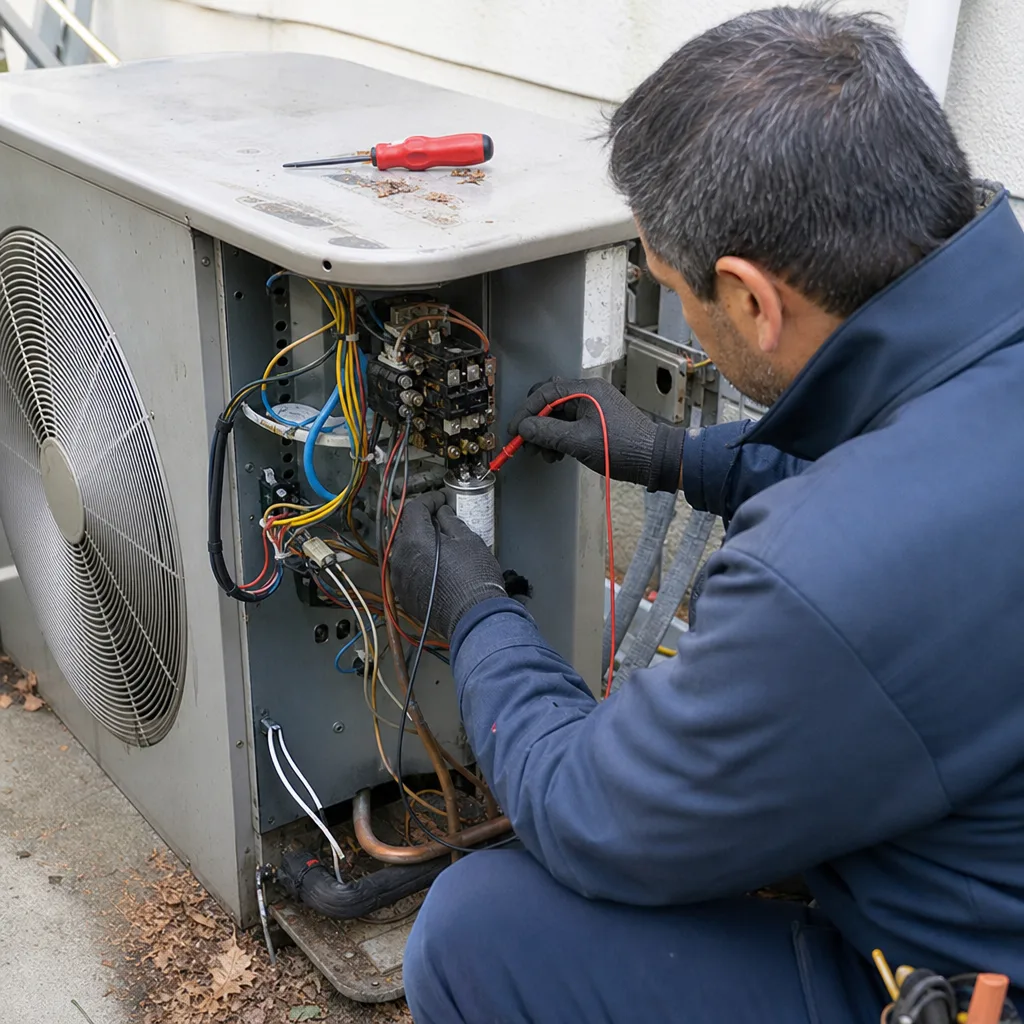
- Any wiring inside the outdoor condenser cabinet, including the contactor and capacitor.
Beyond the danger, there’s a code question. Electrical work outside a like-for-like component replacement typically requires a permit and inspection, and an unpermitted electrical change can complicate insurance and resale. This is also where we see the most common DIY damage: a homeowner replaces a capacitor and miswires the contactor, or pinches a wire behind the cabinet panel. The repair cost after that is higher than the original service call would have been. Our technicians have up to 10 years of experience on these systems, and the wiring job is usually a short visit. If the AC isn’t starting and you’ve already checked the breaker, call us rather than open the cabinet.
How to Be a Smart DIY Homeowner and Cut Service Call Costs
You can save real money not by doing the repair yourself, but by doing the pre-diagnosis yourself. When you call us in Sunnyvale with a specific symptom instead of “it’s not working,” the technician spends less time on basic checks and more on the actual problem. That shortens the visit and gets you a straighter path to a written estimate.
Before you call, run this pre-diagnosis checklist:
- Check the filter. If it’s visibly clogged, replace it and try the system again. A badly restricted filter can mimic a blower or cooling failure.
- Check the breaker. The condenser and air handler each have a breaker at the panel and, on many systems, a disconnect near the outdoor unit. A tripped breaker is one of the most common causes of “no AC.” If it trips again after resetting, stop and call; a repeated trip is a fault, not a nuisance.
- Check the thermostat. Confirm it’s set to COOL or HEAT, the setpoint is below or above room temperature, and the mode isn’t accidentally set to FAN. Fresh batteries fix more no-call-for-heat problems than any other single step.
- Check the outdoor unit. Confirm the condenser isn’t blocked by debris, and listen for the fan. A humming condenser with no fan is a specific symptom worth reporting.
- Check the vents. Confirm registers are open and there’s airflow. No airflow on one side of the house can point to a damper or duct problem rather than the equipment.
- Note the symptoms. “Cool air, no cooling” is different from “warm air, no heat.” Tell us which, and note whether the outdoor unit is running.
That checklist covers the same ground a technician starts with, and you’ll get to the fix faster if you’ve already cleared it. Our AC Repair Sunnyvale team arrives with the pre-diagnosis handled and gets to the real fault. Call (833) 573-8799 for an exact quote; the estimate is free and the price is set per job by the written estimate.
Repair or Replace? Reading the Signs Honestly
The repair-versus-replace decision is the most expensive fork in the road for a Sunnyvale homeowner, and it’s where a brand-agnostic contractor earns their keep. A contractor with a financial incentive to sell a new system has an obvious bias; an honest conversation starts with an inspection and a written estimate that lays out both paths. The right answer depends on the age of the equipment, the cost of the repair relative to the cost of a new system, and the warranty status.
The signs that lean toward replacement:
- Repeated refrigerant leaks. A system that’s lost refrigerant more than once is telling you the coil or the line set is failing, and recharging it again is money down the drain.
- A failed compressor. Compressor replacement runs into the substantial cost of a new system and is rarely worth it on older equipment.
- Repair cost approaching the cost of a new unit. There’s no universal cutoff, but a repair bill that’s a large share of replacement cost on an aging system is a signal.
- A cracked heat exchanger on the furnace. This is a safety issue, not just an efficiency one. A cracked heat exchanger can allow combustion gases into the airstream, and the correct call is replacement, not repair.
- Comfort that no repair fixes. Rooms that never cool evenly, or a system that can’t keep up, sometimes point to a sizing problem that only a new installation resolves.
When the right call is a new system, that’s a load-calculated, scheduled job, not a same-day swap. We give you a written fixed price, a set install date, and a recommendation based on the home and budget, not the manufacturer’s dealer incentive. We install and service all nine major brands, so we can recommend the system that fits your house. Whether your furnace gave out or your AC won’t start, one call handles it. And when the right call is repair, we say so; our furnace technicians handle both repair and full replacement, and we don’t upsell a new unit onto a system that just needs a fixed part.
Sunnyvale Climate Reality: What It Means for Your System
Sunnyvale sits in a mild, Mediterranean climate, and that shapes which parts of the HVAC system do the heavy lifting. Winters are mild here, so furnace load is light; a well-maintained furnace mostly needs clean filters, a functioning thermostat, and an annual inspection to catch heat exchanger issues before they become a safety problem. Summers are warm but rarely brutal, which means the cooling system runs in moderate stretches rather than flat-out. That’s actually harder on some components than a constant load, because the compressor and blower cycle on and off more frequently.
What that means in practice for a Sunnyvale homeowner:
- Airflow hygiene matters more than peak capacity. Restricted airflow from a dirty filter or blocked registers shows up as comfort problems before it shows up as equipment failure, because the system isn’t running long enough to expose the restriction.
- Dust and pollen load builds up on the exterior coil. The outdoor condenser sits in a climate that never freezes it hard, so debris accumulates year-round. Cleaning it is worth doing on a schedule.
- Moderate winters hide furnace problems. A furnace that runs only in short bursts can mask a failing heat exchanger or a weak inducer motor for a whole season. That’s why furnace repair evaluation ahead of the cool months is worth the visit.
- Humidity swings affect the evaporator coil. Mild, seasonally humid stretches mean condensate drainage matters; a plugged drain line is a common cause of water near the air handler.
If you’re in Sunnyvale and your system isn’t keeping up, our team covers both the heating and cooling side, which means you don’t need to source separate contractors for summer and winter problems. If you’ve recently moved into a home here, or a renovation leaves you without a working system, we can look over what’s installed and give you a straight read on what it can and can’t do. See our Sunnyvale page for more on how we work locally.
Common Mistakes to Avoid
- Opening the refrigerant circuit to “top it off.” Refrigerant doesn’t get consumed; if it’s low, there’s a leak. Adding refrigerant without EPA Section 608 certification and without finding the leak is a federal violation and a warranty problem. Call a licensed technician.
- Replacing an air handler capacitor or contactor without opening the breaker. The high-voltage side of an air handler stays live even when the thermostat is off. This is a common cause of DIY electrical injury; leave the cabinet closed and call us.
- Going far higher on filter MERV rating than the system was designed for. A high-MERV filter can restrict airflow as badly as a dirty one. Stick to the rating the equipment manufacturer calls for, or step up gradually and watch for reduced airflow.
- Ignoring a repeated breaker trip. A breaker that trips once is a nuisance. A breaker that trips after you reset it is telling you something’s wrong. Diagnose the fault rather than resetting it repeatedly.
- Installing a new system without pulling a permit. Most California cities, Sunnyvale included, require a permit for HVAC installation. Unpermitted work complicates resale, insurance, and warranty coverage. Ask for the permit number before work begins.
- Buying the cheapest thermostat without checking the wiring. A smart thermostat often needs a C-wire the old unit didn’t. Check the wire count before you buy, or you’ll be back at the store.
- Waiting until the system fails entirely before a maintenance check. A furnace problem caught in the mild fall is cheaper and safer than one discovered on the first cold morning. The same goes for an AC that’s starting to short-cycle in early summer.
See the difference
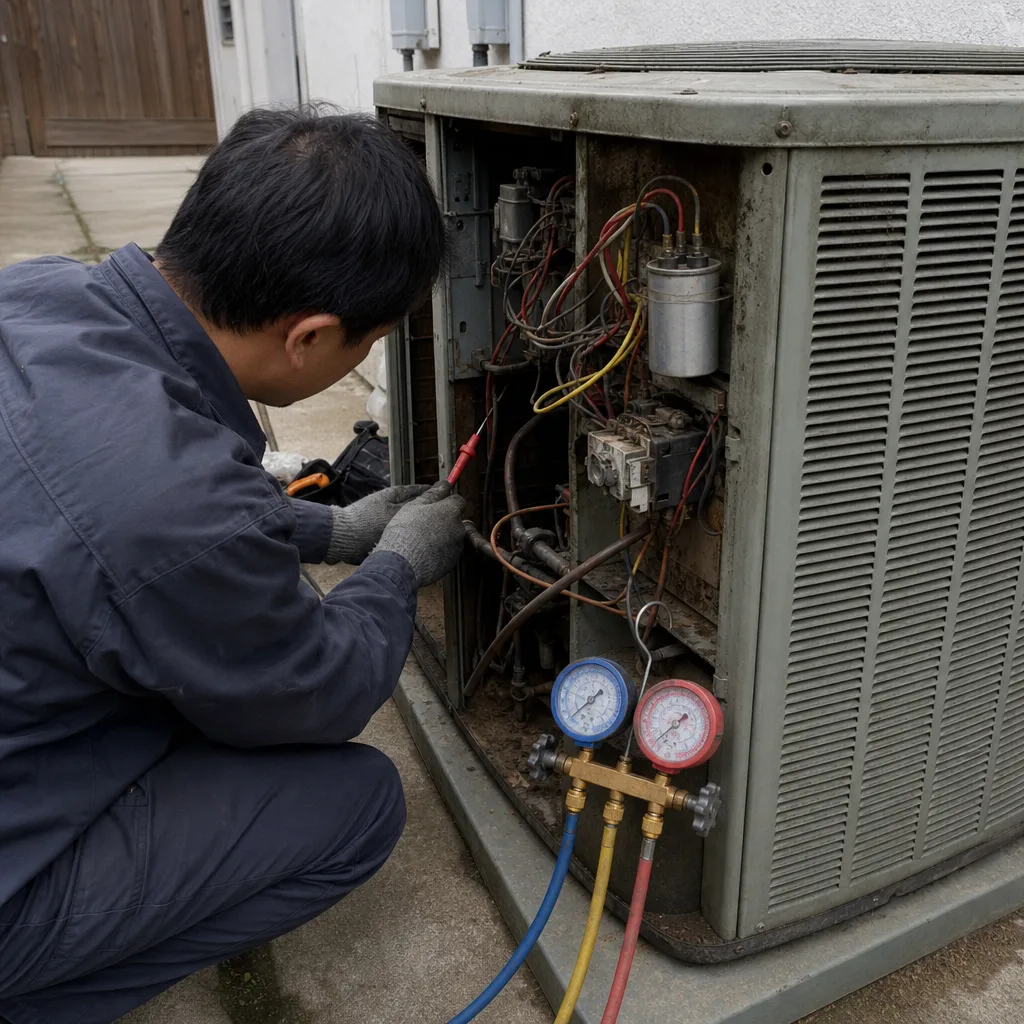 Before
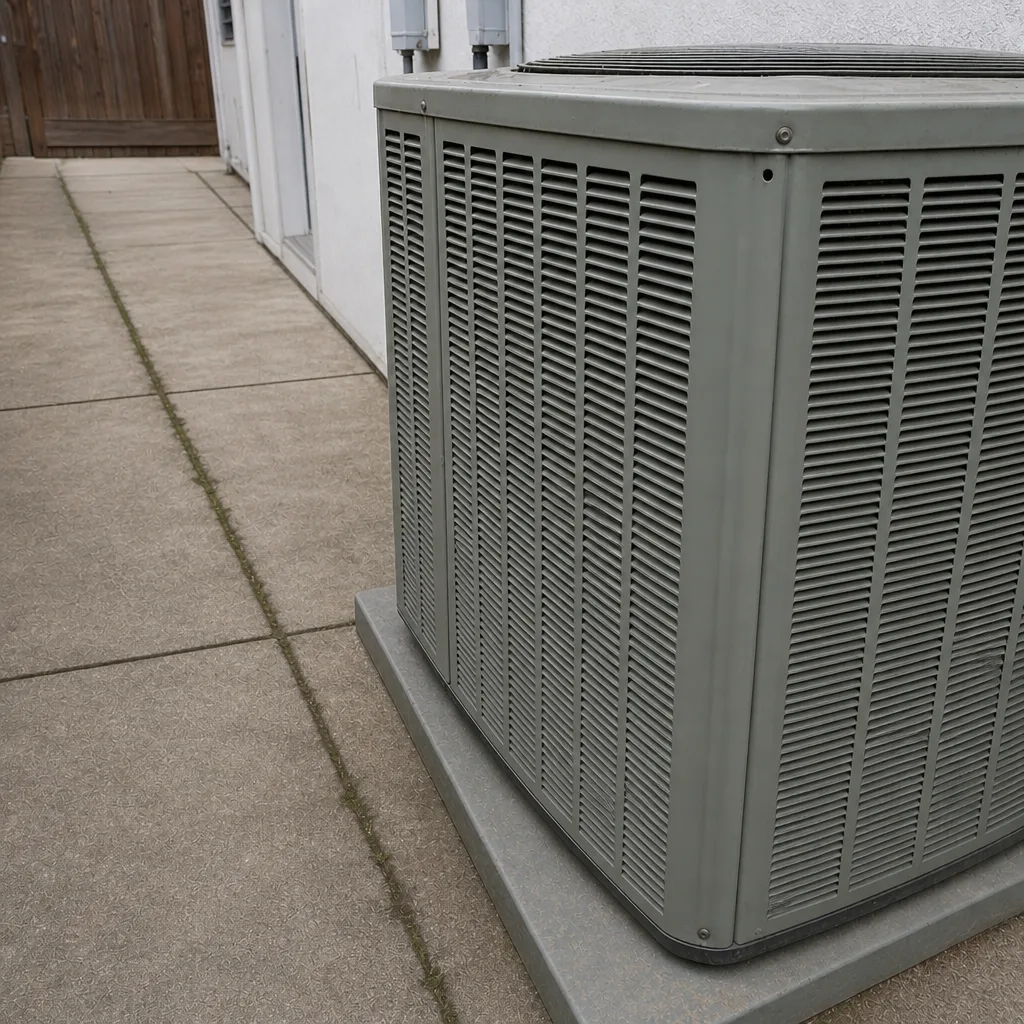 After
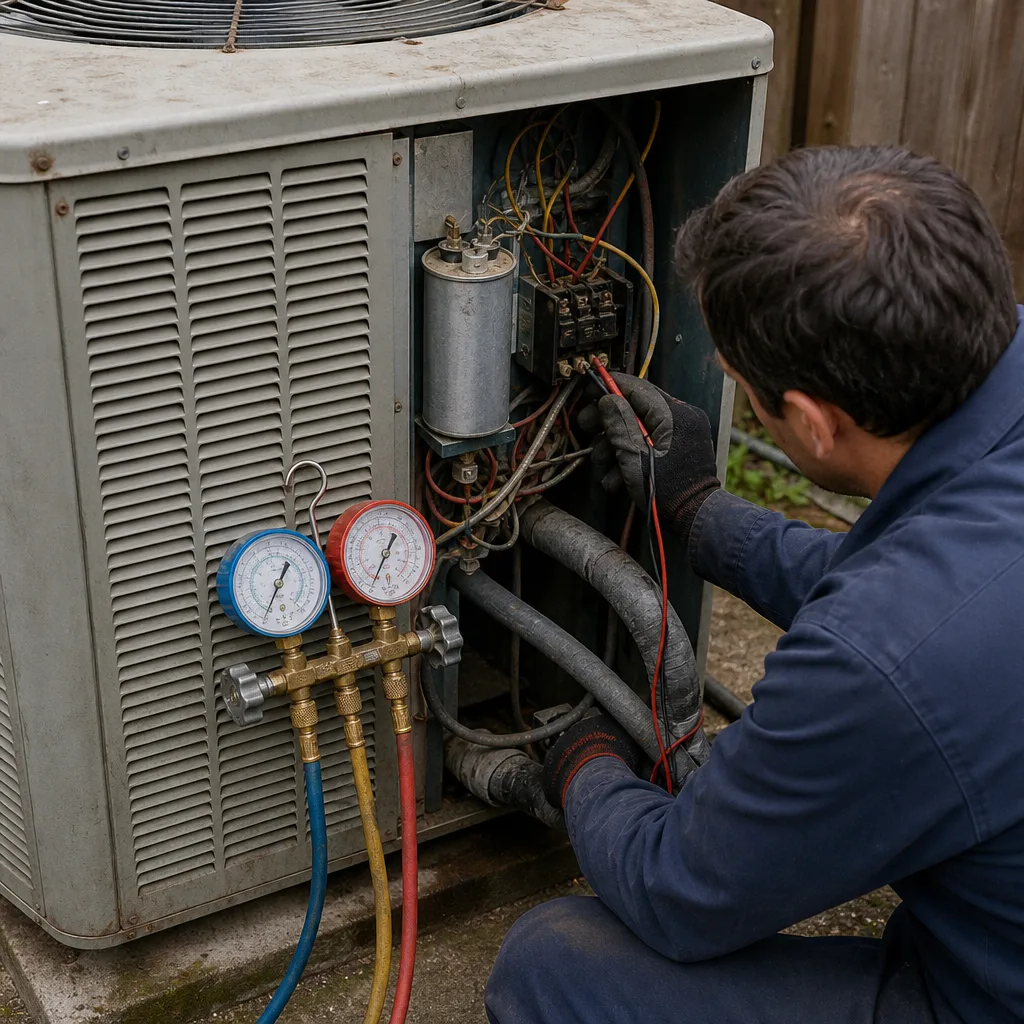 Before
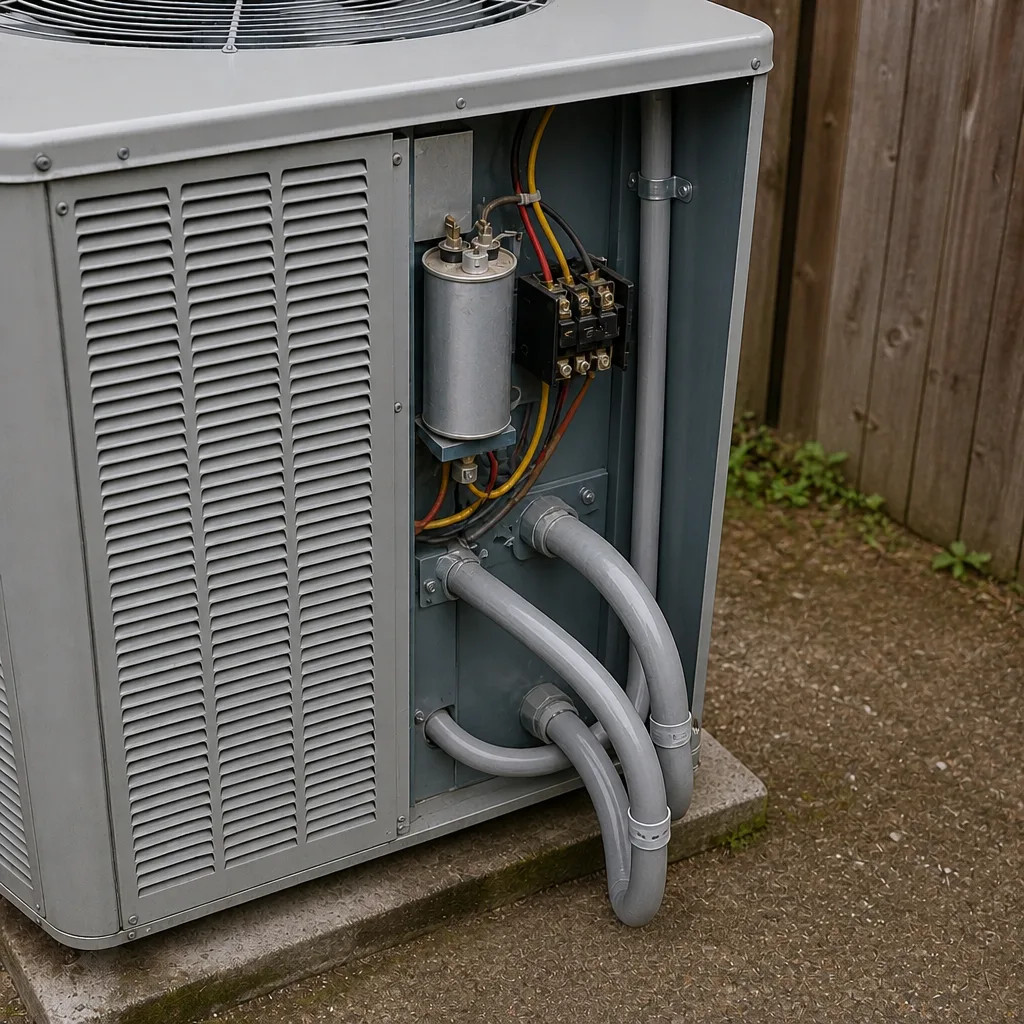 After
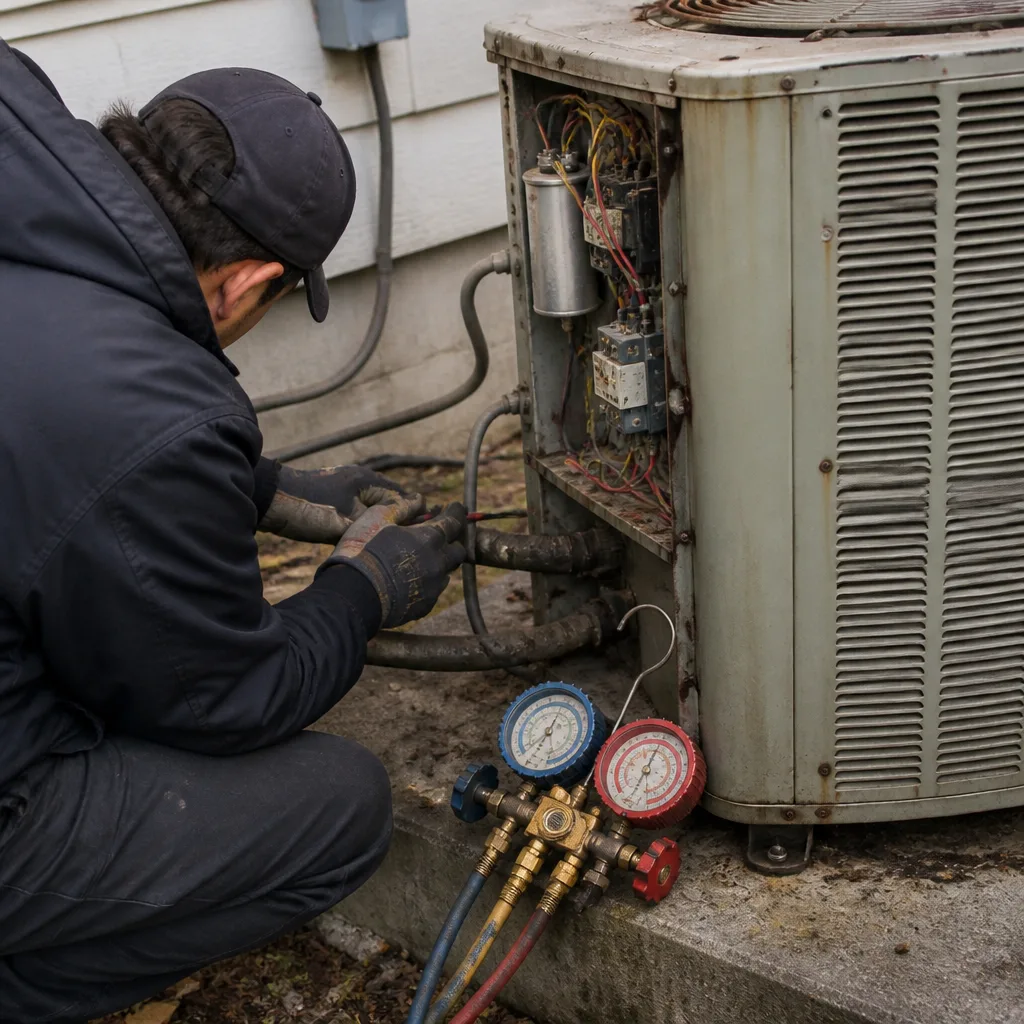 Before
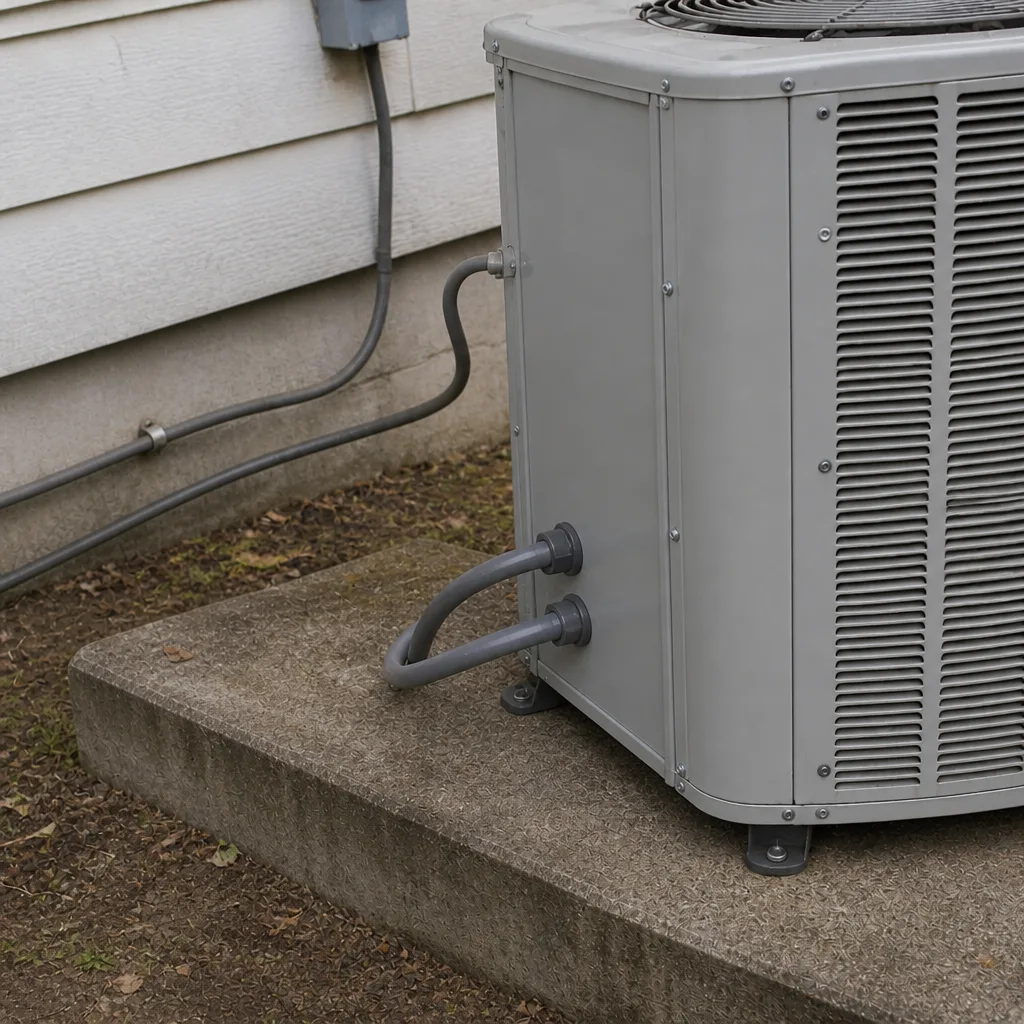 After
When to Call a Professional
Call a licensed technician for any refrigerant issue, any work inside the air handler or condenser cabinet, any gas line or heat exchanger concern, any repeated breaker trip, any furnace problem that isn’t a thermostat or filter, and any full AC installation or furnace replacement. Those tasks sit on the wrong side of the California license line, can void the manufacturer warranty, and carry real safety risks. Do not open a sealed refrigerant circuit, do not pull high-voltage wiring, and do not attempt a gas line repair. Our technicians have up to 10 years of experience and work across all nine major brands. For diagnostic and repair work, we answer 24/7 with fast dispatch from 7am to 7pm, Sunday through Friday. AC Repair Sunnyvale offers free estimates in Sunnyvale – call (833) 573-8799.
Frequently Asked Questions
No, not legally as a pay-for-work or business arrangement, and not without triggering permit and warranty problems even if you’re doing it on your own home. AC installation is licensed trade work in California, most cities require a permit for it, and manufacturer warranties on Carrier, Trane, and Daikin specifically condition coverage on licensed installation. A DIY install can void the warranty before the unit is even running. Call (833) 573-8799 for a free estimate on a permitted installation.
No. Adding, recovering, or opening the refrigerant circuit requires EPA Section 608 certification under the Clean Air Act, and there’s no homeowner exemption. Refrigerant released during a DIY repair is a federal venting violation, and most manufacturer warranties exclude DIY refrigerant work. If your system is low on refrigerant, it has a leak that needs to be found and repaired. Call us at (833) 573-8799 to diagnose it.
Filter replacement, thermostat replacement (when the wiring matches), exterior condenser coil cleaning with a garden hose, and clearing or opening supply and return vents are all safe and legal. None of them touch the refrigerant circuit, the 240-volt wiring, or require a permit. They’re the four tasks that carry the best return on effort and don’t risk a warranty claim. If a filter change or thermostat swap doesn’t fix the problem, call (833) 573-8799 for AC Repair Sunnyvale diagnostics.
It can, yes. Warranty language for Carrier, Trane, Daikin, and other major brands typically conditions coverage on installation by a licensed contractor, and some brands also condition the full parts warranty on documented professional maintenance. Self-repairs and unauthorized refrigerant additions are common exclusions. If you’re unsure whether a repair would affect your warranty, ask before you start. Call (833) 573-8799 and we’ll walk you through what your warranty likely says.
The highest-return step is pre-diagnosing before you call. Check the filter, the breakers, the thermostat setting and batteries, the outdoor unit’s airflow, and the vents first, then describe the symptom clearly when you call. That shortens the visit and gets the technician to the actual fault faster. Buying the correct filter and keeping it clean is the other big lever. Call (833) 573-8799 for an exact quote; the estimate is free.
Sometimes, but not for the dangerous parts. A thermostat set wrong, dead thermostat batteries, or a clogged filter are legitimate DIY checks. A furnace that’s igniting improperly, that smells like gas, or that has a suspected cracked heat exchanger is not; those are gas and combustion safety issues that need a licensed technician. If you’ve checked the thermostat and filter and it’s still not heating, call (833) 573-8799 for furnace repair.
The Bottom Line
In Sunnyvale, the DIY-versus-pro question resolves into three buckets. Filters, thermostats, exterior coil cleaning, and vent clearing are yours to handle, and doing them well saves real money. The refrigerant circuit is off-limits, full stop, because EPA Section 608 certification is federal law and there’s no DIY exemption. Air handler wiring is a hard stop because 240-volt conductors stay live behind the cabinet door. Everything else – installation, furnace replacement, gas concerns, repeated breaker trips – belongs to a licensed contractor, and the warranty language on Carrier, Trane, and Daikin equipment backs that up. When your system needs the licensed side, call (833) 573-8799 for a free estimate. We answer 24/7, with fast dispatch from 7am to 7pm, Sunday through Friday.
Written by the team at AC Repair Sunnyvale.