
Last updated November 15, 2026
 AC repair
 Furnace & heating
 Heat pumps
 Ductless mini splits
 Carrier
 Trane
 Goodman
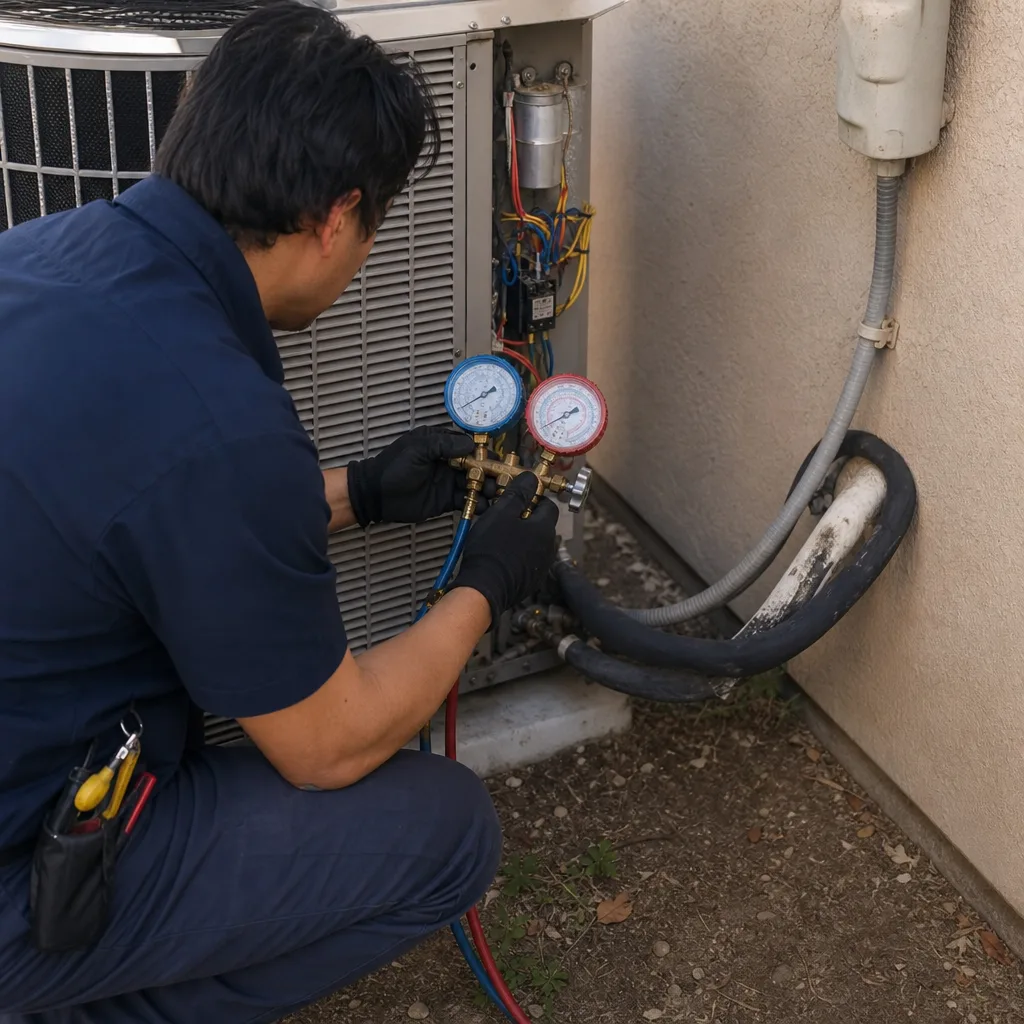
Seasonal tune-up and full diagnostic on your Carrier, Trane, or Goodman system - readings shown to you before any repair is proposed
Diagnosis first, numbers second - you approve the repair price before a single part goes in.
Get your free estimateThe Complete AC Installation Guide for Sunnyvale Homeowners
Most air conditioners that disappoint their owners aren’t broken. They were the wrong size to begin with. A unit that’s too big cools the house in short, violent bursts, then sits idle, never running long enough to pull the humidity out of the air or settle into an efficient rhythm. A unit that’s too small runs itself to death on the handful of hot afternoons we actually get. Here in Sunnyvale, where the summer is mild enough that sizing mistakes hide for years, that gap between “the AC turns on” and “the house feels right” is where most of the frustration lives. This guide walks you through the decisions that actually determine how a system performs: load calculation, ductwork, permits, equipment tiers, and the PG&E and TECH Clean California incentives available in 2026 that can change the math. We’ll show you where generic advice goes wrong in this city and what to check before you sign anything.
Quick Answer
A successful AC installation in Sunnyvale comes down to three things: a room-by-room Manual J load calculation (not a rule-of-thumb guess based on square footage), an honest audit of your existing ductwork before a new unit goes in, and equipment matched to how few cooling hours this climate actually delivers. Get those three right and the brand, the tier, and the rebate paperwork all fall into place. Get them wrong and even a premium system will underperform.
Styles & brands we work with
- AC repair
- Furnace & heating
- Heat pumps
- Ductless mini splits
- Carrier
- Trane
- Goodman
Table of Contents
- Why Manual J Load Calculations Matter More Here Than Inland
- Sunnyvale Permits and What Inspectors Actually Check
- Auditing Your Ductwork Before You Install
- Single-Stage, Two-Stage, or Variable-Speed: What Makes Sense
- PG&E and TECH Clean California Incentives in 2026
- Choosing a Brand Without Getting Sold a Brand
- What a Proper Installation Process Looks Like, Step by Step
- What AC Installation Costs in Sunnyvale
Why Manual J Load Calculations Matter More Here Than Inland
In a place like Fresno or Redding, oversizing gets punished fast. The system short-cycles, the rooms swing, and the homeowner notices within a week. Sunnyvale is gentler. Our summer peaks are moderate, our nights are cool, and a slightly oversized system can run for a couple of seasons before the discomfort and the higher bills become obvious. That’s exactly why the load calculation matters more here, not less. There’s no brutal heat to expose the mistake, so the mistake just quietly lives in your house.
A proper Manual J calculation looks at every room individually: window area and orientation, wall and ceiling insulation, how much sun a west-facing slider takes on a July afternoon, how many people live there, and how the house actually uses its space. National rule-of-thumb charts were built around hotter, drier climates with different construction. Run those charts against a typical Sunnyvale home in the 94087 zip code and you’ll frequently land 10 – 15% above what the room-by-room math actually calls for. That surplus capacity doesn’t buy you comfort. It buys you short cycling, uneven temperatures, and a compressor that wears out early.
What we look for during a real load calculation:
- Room-by-room heat gain, not a single whole-house number
- Window orientation and any shading from trees or overhangs
- Attic and wall insulation levels, which vary widely across Sunnyvale’s older housing stock
- How many people are home during the day, and whether a home office runs hot
- Whether the return air path is adequate for the equipment being considered
One more local wrinkle: coastal cool nights are a real factor. Sunnyvale evenings drop enough that a well-sized system can often be run in a lower-capacity mode for much of the cooling season, which is exactly the kind of detail that gets lost when an installer sizes off a chart built for a hotter market. Ask any contractor you’re considering for the actual load calculation, not a verbal guess. If they can’t produce it, that tells you something.
Sunnyvale Permits and What Inspectors Actually Check
AC installation in Sunnyvale requires a permit through the City’s Building Division. This isn’t a formality you can skip or hand-wave. A permitted job gets inspected, and the inspection is where sloppy work becomes visible. When you’re evaluating bids, ask directly whether the permit is included. A quote that quietly leaves it out isn’t cheaper. It’s a bid that’s shifting risk onto you.
Final sign-off typically focuses on a handful of things:
- Electrical disconnect and overcurrent protection. The condenser needs a properly sized disconnect within sight of the unit, and the breaker must match the equipment’s nameplate rating.
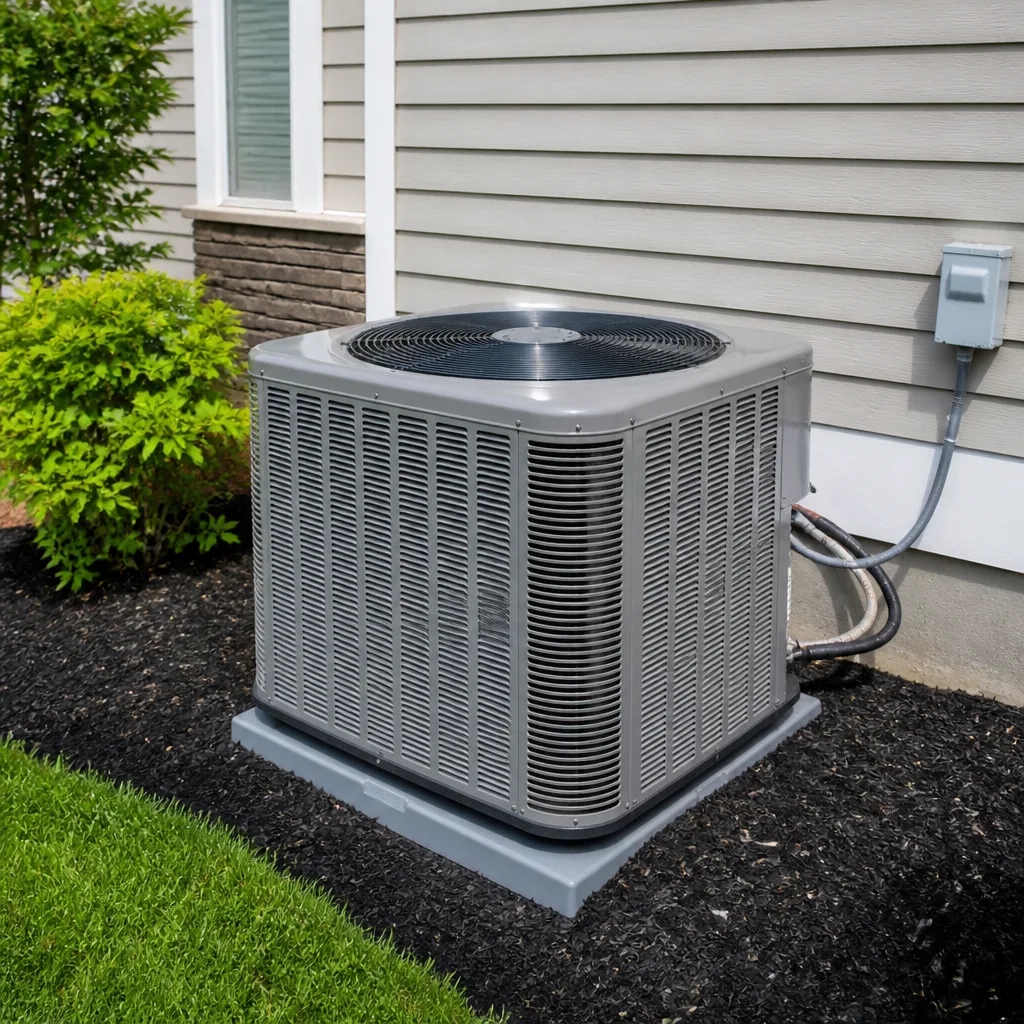
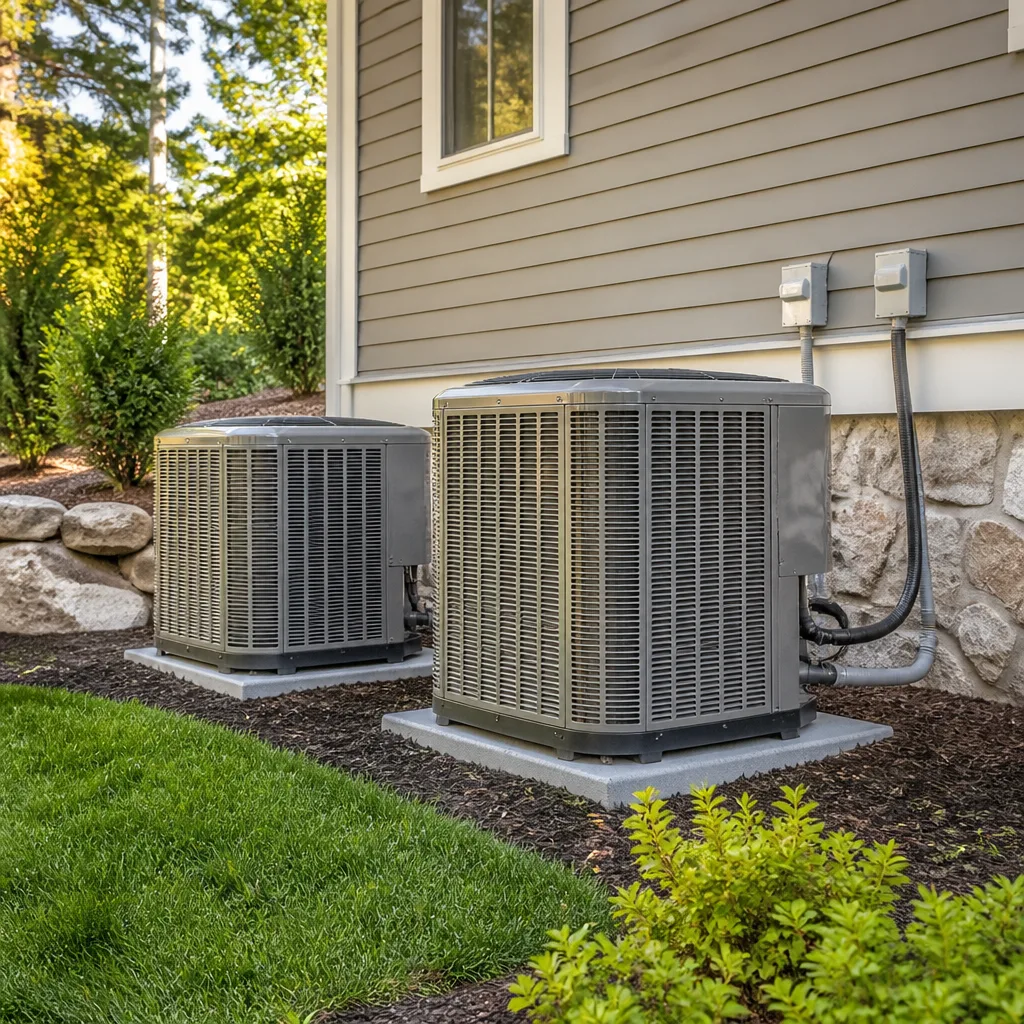
- Clearances and pad placement. Inspectors check that the outdoor unit has the clearance the manufacturer specifies and sits on a level pad that drains away from the house.
- Line set and refrigerant work. The installer’s licensing and the documentation of the charge matter here.
- Condensate management. The drain path needs to terminate correctly, with a safety switch so a clogged line doesn’t soak your ceiling or floor.
- Equipment labeling and match-up. The indoor coil, air handler, and outdoor condenser should form a documented matched system.
Here’s what we see go wrong most often: unpermitted replacements. A previous homeowner had a unit swapped out without a permit, and now the new installation has to reconcile with work that was never inspected. That doesn’t mean the job is doomed. It means the contractor needs to look at the existing electrical and refrigerant lines honestly and tell you what needs correcting before final sign-off.
Ask every bidder to state in writing that the permit is pulled in their name and that they’ll handle the inspection. That single line in the contract eliminates a lot of future headache. It also tells you the contractor is comfortable with a city inspector looking at their work, which is not a small thing.
Auditing Your Ductwork Before You Install
You can spend good money on a premium condenser and hand it a leaky duct system that throws away a chunk of the cooling before it ever reaches a register. Sunnyvale has a lot of homes from the 1970s and earlier whose ductwork is still original: tar-taped joints, runs that sag or pinch, disconnected sections hidden above a ceiling, and returns that were sized for a smaller unit than the one being installed. This is the most commonly skipped step in AC installation, and it’s often the one that decides whether the system performs.
A duct audit before installation isn’t glamorous. It’s a technician in the attic and under the house, looking at the actual runs, checking for gaps at every joint and boot, confirming the return air path can handle the airflow the new equipment needs, and noting any insulation damage. On older Sunnyvale homes, we regularly find duct systems that leak enough to waste 20 – 30% of the cooling output before it ever reaches the room. You’ll never see that as a leak. You’ll see it as a system that “just doesn’t cool the back bedroom.”
What to have checked:
- Every joint and connection, especially where ducts meet registers
- Return air size, because undersized returns strangle a new system’s airflow
- Duct insulation integrity, particularly in hot attics
- Run layout: pinched flex duct or sharp turns reduce airflow significantly
- Whether any ducts terminate in the wrong place, like an unconditioned garage
Sealing leaks and correcting the return are straightforward, and they’re worth doing at the same time as the installation rather than two years later as a separate project. If a contractor proposes to drop a new unit on your existing ducts without looking at them, ask them to look. It’s a fair question, and any honest technician will welcome it.
Single-Stage, Two-Stage, or Variable-Speed: What Makes Sense
Sunnyvale’s cooling season is short and relatively gentle, but the days we do get are real. The compressor type determines how the system behaves across that range, and the honest answer is that the “best” compressor is often not the most expensive one. Here’s how the three tiers actually differ in practice:
- Single-stage. Runs at full capacity or off. Simple, fewer parts to fail, and the least expensive upfront. In a mild climate with limited cooling hours, a properly sized single-stage unit performs well and doesn’t demand much from your wallet.
- Two-stage. Runs at roughly two-thirds capacity most of the time and kicks into full output only on peak days. Longer run times at lower capacity tend to even out temperatures and pull humidity more effectively. This is the sweet spot for many Sunnyvale homes, especially where one part of the house runs hot.
- Variable-speed. Modulates continuously across a wide range. Quietest and the most comfortable in terms of steady temperature, but the higher upfront cost only pays back if you’re cooling a fairly large home with meaningful run time. In a mild climate and a modest house, you’re paying for refinement you may not feel.
The math here is straightforward once you know your cooling hours. A house that runs its AC 30 days a year doesn’t need the efficiency curve of a house that runs it 120 days. A house that fights uneven temperatures and humidity benefits more from two-stage than from a bigger single-stage unit. This is where the load calculation earns its keep: it tells you what capacity you actually need, which then tells you which tier makes sense.
In our experience in Sunnyvale, most homes land between a correctly sized single-stage and a two-stage system. Variable-speed systems shine in larger houses with longer run times and specific comfort complaints. But the decision should follow the load calculation, not the price sheet.
PG&E and TECH Clean California Incentives in 2026
For 2026, qualifying AC equipment in Sunnyvale can fall under PG&E rebate programs and TECH Clean California incentives, both of which have equipment-tier requirements. The exact dollar amounts and eligibility rules change, and they’re tied to the efficiency rating of the specific model rather than the brand name. That’s why the paperwork happens before you pick a unit, not after.
The general shape of how this works:
- Determine which efficiency tier your load calculation and comfort goals actually point to.
- Check the specific model number against current PG&E and TECH Clean California eligibility lists for 2026.
- Confirm the contractor will handle the rebate documentation, since the paperwork is part of the job.
- Have the installation scheduled only after the equipment is confirmed eligible and the forms are in order.
What we tell homeowners: don’t choose a system because it qualifies for a rebate. Choose the system that fits your house, then see whether it qualifies. The tail shouldn’t wag the dog, and a rebate is not a reason to buy more capacity than your room-by-room calculation says you need. That said, when a two-stage or variable-speed system is already the right call for comfort, the rebate can narrow the price gap meaningfully, and it’s worth the extra twenty minutes of paperwork.
We’d also flag one thing: incentive programs reward documented, permitted, properly installed work. An unpermitted installation undercuts your eligibility. If a contractor can’t or won’t pull the Sunnyvale permit, the rebate is likely off the table too. That’s a strong signal to look elsewhere.
Choosing a Brand Without Getting Sold a Brand
Brand matters, but not the way it’s usually framed. Every major manufacturer makes reliable equipment and every one has models that perform well above their tier. What actually matters is whether the person installing it knows the brand in your home, and whether they’re recommending a system for your house or for their dealer incentive. Our team works across nine major brands, including Carrier, Trane, Lennox, Goodman, Rheem, York, Daikin, Bryant, and American Standard, so we’re not locked into a single manufacturer’s margin. That range, from the value tier (Goodman, Rheem) to the premium lines (Trane, Carrier, Lennox), means the recommendation can follow the house rather than the commission sheet.
When you’re weighing brands, ask these questions instead of comparing logos:
- Does the proposal show the exact model numbers for the outdoor unit, indoor coil, and air handler?
- Are these components documented as a matched system?
- Which parts carry the longest warranty, and who honors it locally?
- Does the contractor service that brand, or just sell it?
Brand loyalty isn’t a virtue in this trade. Brand familiarity is. A technician who has worked on your model knows its quirks, its common service needs, and how to wire and charge it correctly. That’s the practical difference. If you’ve got a York condenser and a Bryant air handler, a contractor who only stocks one brand is going to want to sell you something, and that’s not the same as diagnosing what you have. If you’re comparing options and want a straight read on what fits your home, AC installation is where the specifics live, and it’s worth reading before you commit to a proposal.
What a Proper Installation Process Looks Like, Step by Step
A good installation has a sequence, and knowing the sequence lets you judge whether a contractor is doing the work or rushing it. Here’s how a proper AC installation should run in Sunnyvale:
- Load calculation. A room-by-room Manual J, using the actual house, not square footage alone. This should be a written document, not a verbal guess.
- Duct audit. Visual and airflow checks before equipment selection is finalized. Leaks, undersized returns, and pinched runs identified.
- Equipment selection. Matched system chosen for the load, with the tier (single-stage, two-stage, or variable-speed) chosen for comfort and cooling hours.
- Permit pulled. The City’s Building Division permit is filed and included in the written proposal.
- Rebate documentation. Model numbers checked against 2026 PG&E and TECH Clean California eligibility and paperwork prepared.
- Day-of installation. Old equipment removed, pad and electrical disconnect installed correctly, line set and refrigerant work done and documented, condensate path secured with safety switch.
- Commissioning and test. Airflow, refrigerant charge, and temperature drop verified against specifications, not “it feels cold.”
- Final inspection and documentation. City inspection signed off, and you receive the load calculation, equipment documentation, and rebate paperwork.
- Follow-up. A check that the rooms warm the way the load calculation predicted. If not, that’s a diagnostic question, not a sales question.
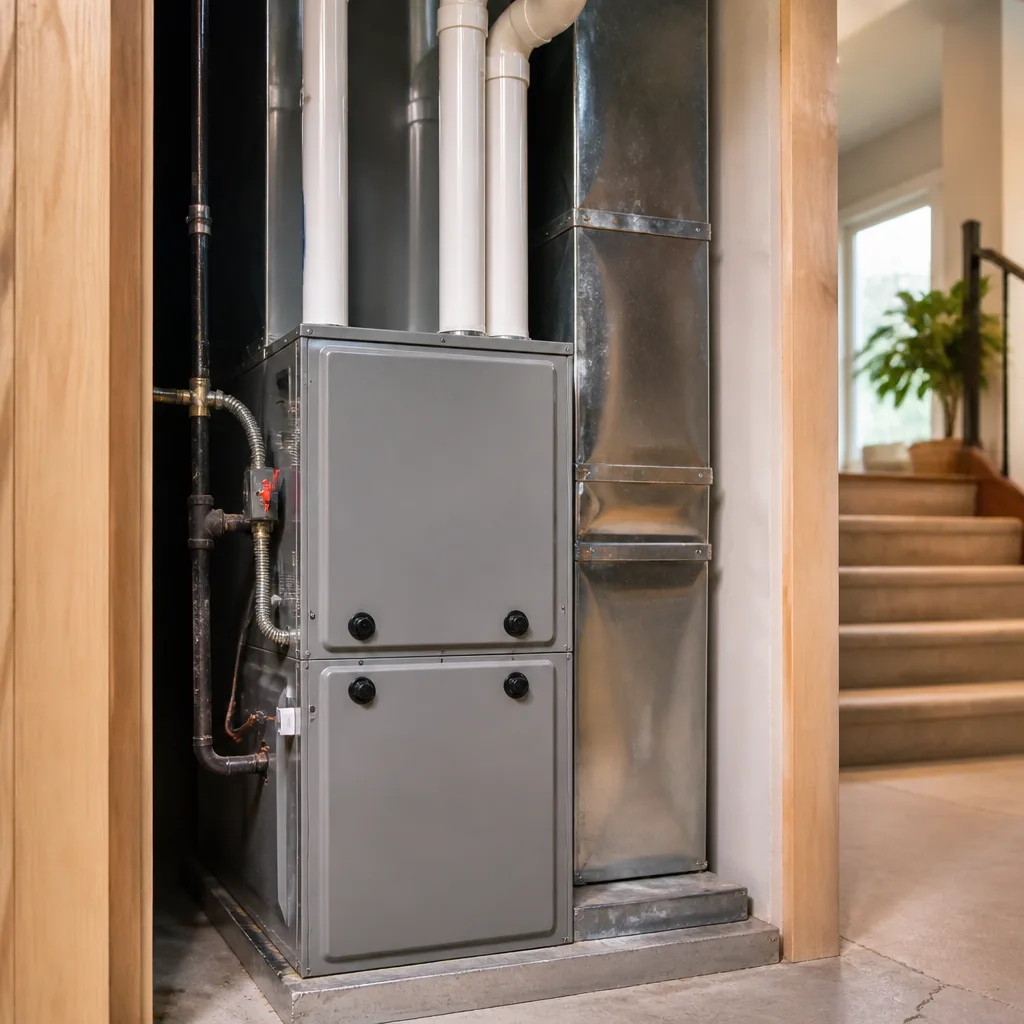
That last step is where trust is built. A properly installed system, in a properly sized home, should perform as predicted. If a room doesn’t cool right, the answer isn’t “you need a bigger unit.” It’s a duct or balance question, and it deserves a straight look. If your furnace is also aging, that’s a separate conversation your HVAC contractor should be able to have with you directly rather than passing you to a second company, which is why full heating and cooling under one contractor avoids the worst of it.
What AC Installation Costs in Sunnyvale
Costs in Sunnyvale depend mostly on four things: the equipment tier, whether the ductwork needs sealing or repair, the complexity of the install (like a difficult attic access or a line set that needs rerouting), and whether electrical work is needed to bring the disconnect up to spec. The ranges below are typical estimates, not a quote. Your written estimate sets the final price.
- Single-stage system, straightforward installation: roughly $5,500 to $8,500
- Two-stage system, straightforward installation: roughly $7,500 to $11,500
- Variable-speed system: roughly $10,000 to $16,000
- Duct sealing or repair: typically $800 to $2,500 depending on scope
- Electrical corrections to code: variable, typically a few hundred dollars
Those ranges assume a standard residential replacement with an existing duct system that doesn’t need major reconstruction. Additions, new systems installed where none existed, and homes with significant ductwork problems run higher. Rebates can reduce the net cost when the equipment qualifies, but again, the equipment choice should follow the load calculation first.
For upgrades that fall outside a straight AC replacement, including the heating side, the same house often needs a coordinated look at both. If the furnace is due, furnace repair and replacement are part of the same conversation, and there’s real value in having one contractor who can assess the whole system without a financial bias toward one half of it. Repair or replace, we tell you which one actually makes sense for your house.
If you need a feel for how Sunnyvale homeowners typically bundle these decisions, and what the local market looks like for a home in this climate, more context lives under Sunnyvale. Our technicians have up to 10 years of experience across the brands in this market, and that experience mostly shows up in what we talk you out of, not what we sell you.
Common Mistakes to Avoid
- Sizing by square footage alone. A rule-of-thumb chart built for a hotter climate will oversize a Sunnyvale home by 10 – 15% on average. Ask for the room-by-room Manual J or expect the wrong equipment.
- Installing on unsealed 1970s ductwork. A new unit on a leaky duct system wastes 20 – 30% of its output before the air reaches a room. Audit the ducts before you sign.
- Skipping the permit to save money. Unpermitted installation in Sunnyvale fails inspection down the road and typically disqualifies you from PG&E and TECH Clean California rebates. The permit goes in the written bid.
- Choosing equipment by rebate, not by load. A rebate on the wrong tier is still a rebate on equipment your house didn’t need. Size first, then check eligibility.
- Opting for variable-speed by default. In a climate with limited cooling hours, the premium for variable-speed often doesn’t pay back. Two-stage covers most Sunnyvale homes well.
- Accepting a verbal estimate. The final price lives in the written estimate. A verbal number and a sales pitch are not the same thing as a documented proposal.
- Letting one contractor handle cooling and a different one handle heating. Split accountability makes it easy to blame the other side when a room doesn’t cool right. One company for the whole system avoids that.
See the difference
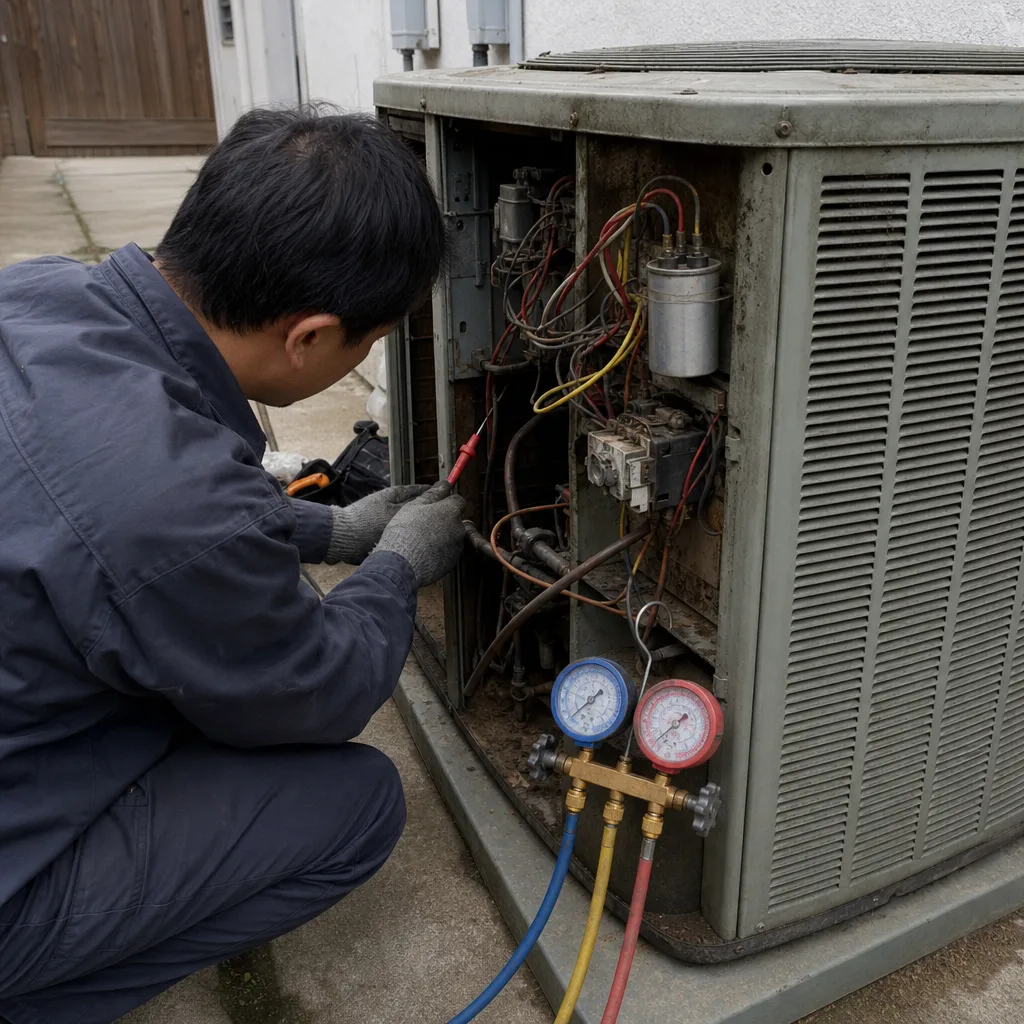 Before
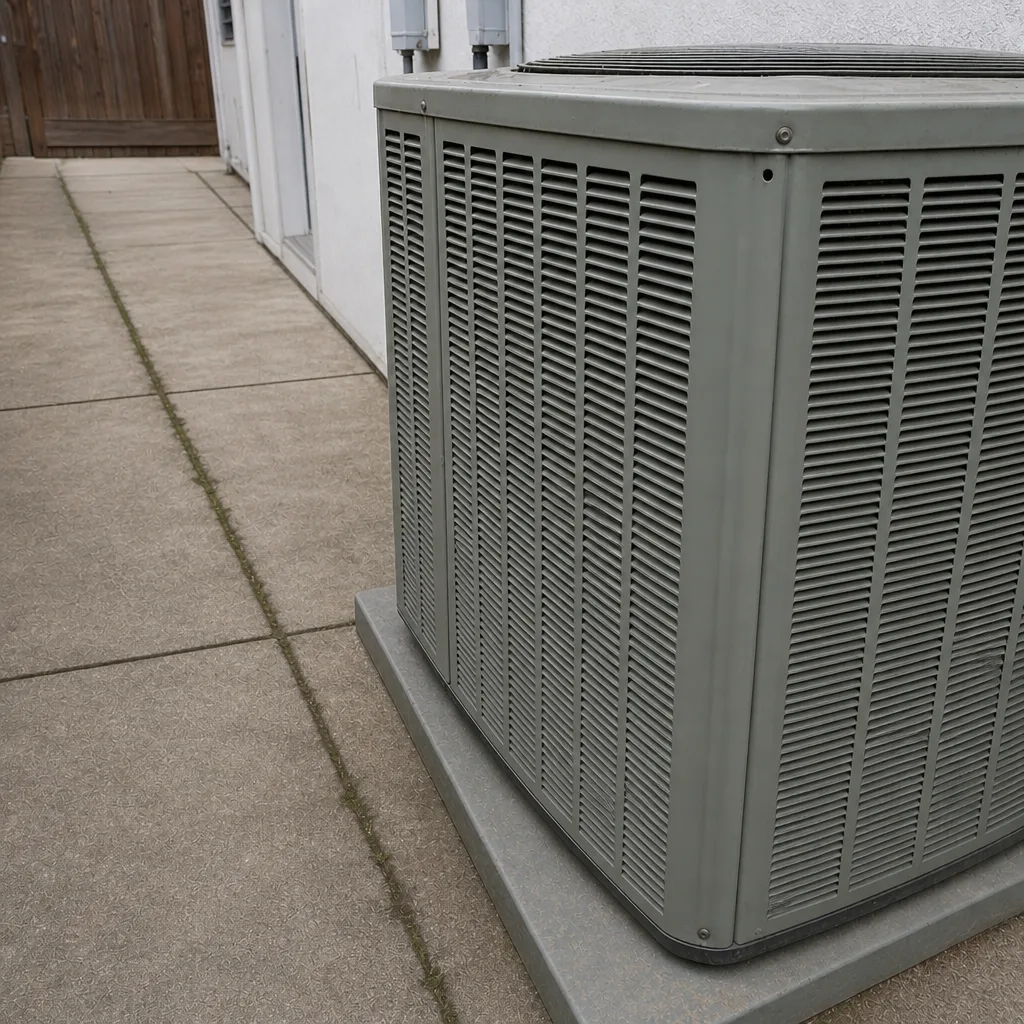 After
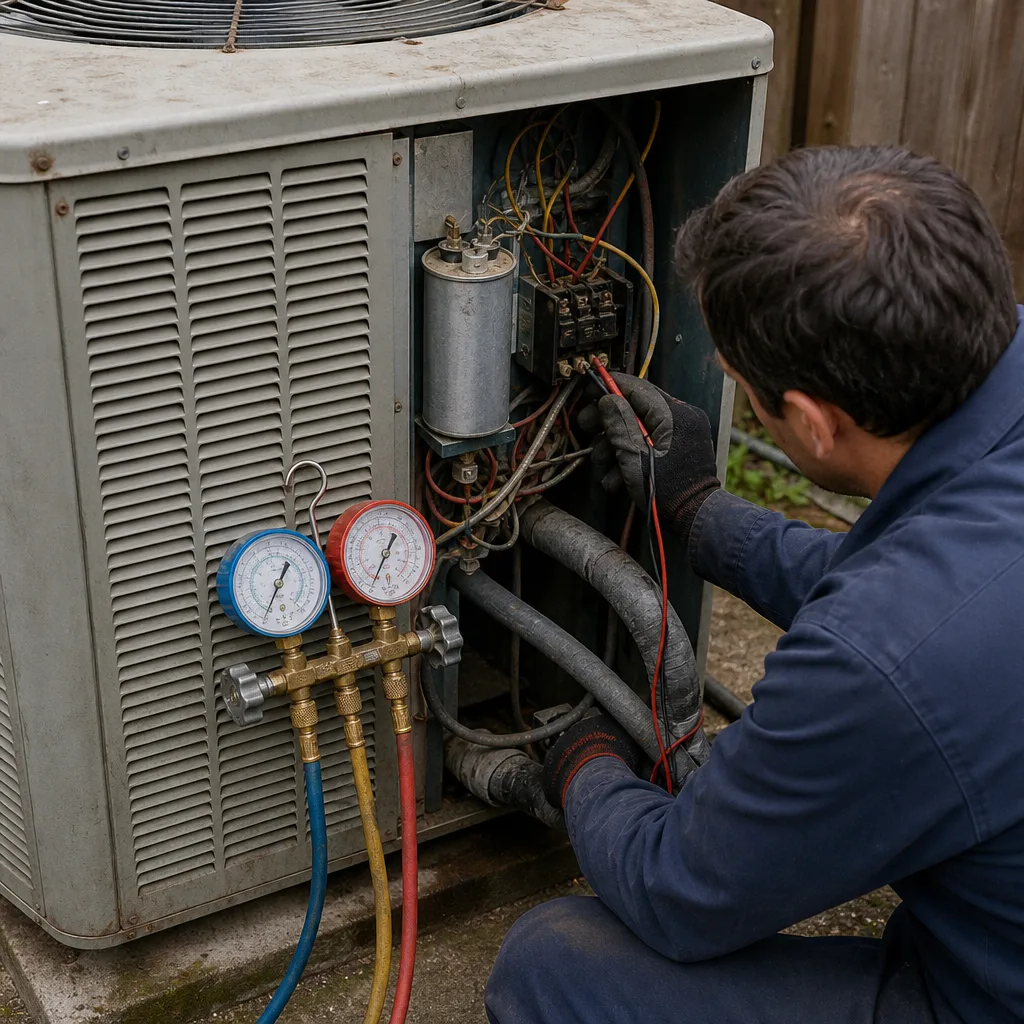 Before
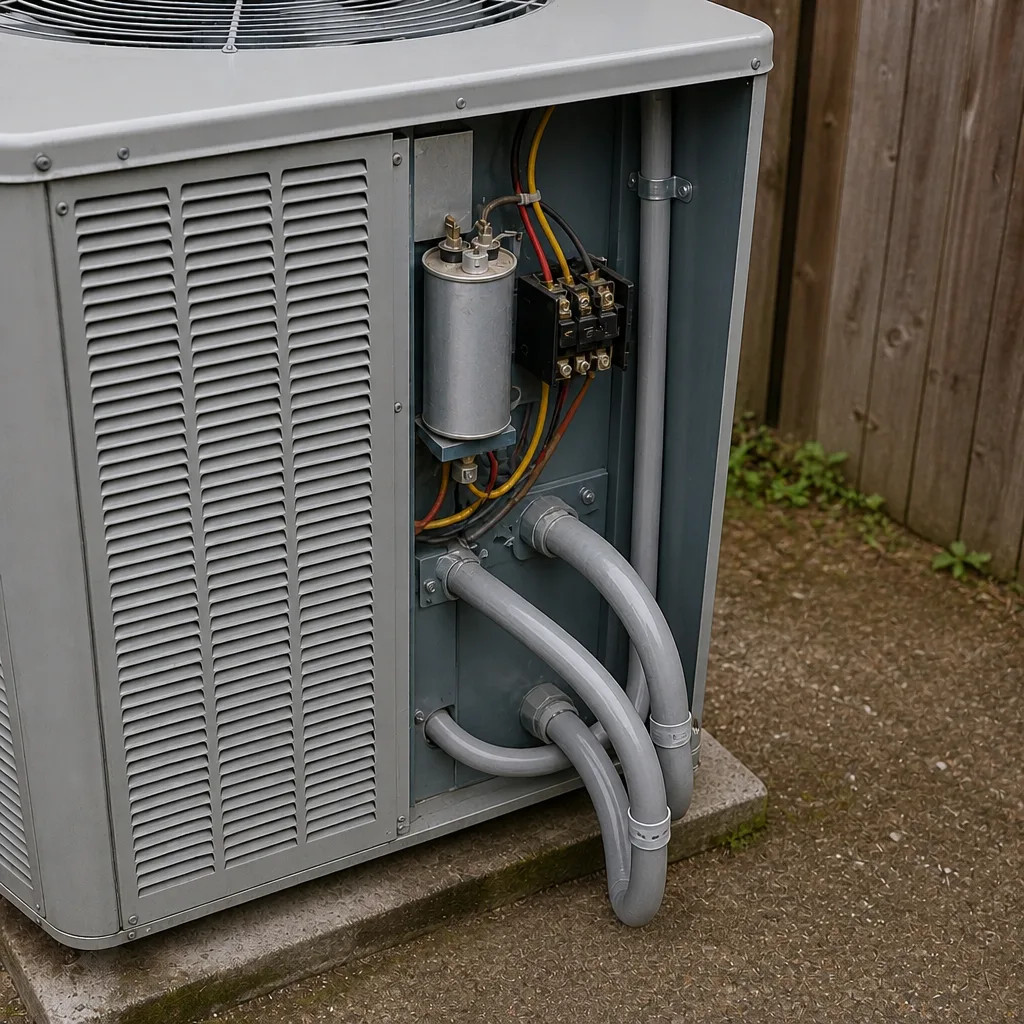 After
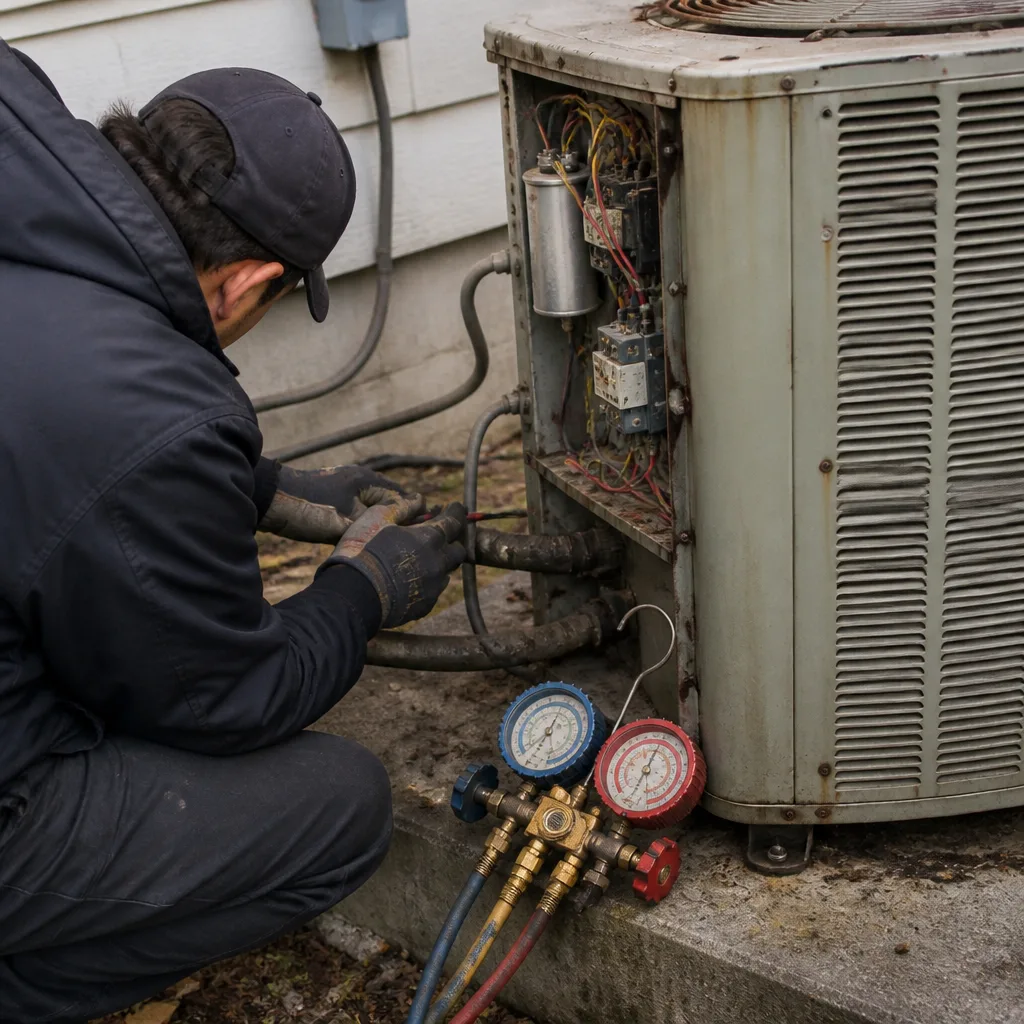 Before
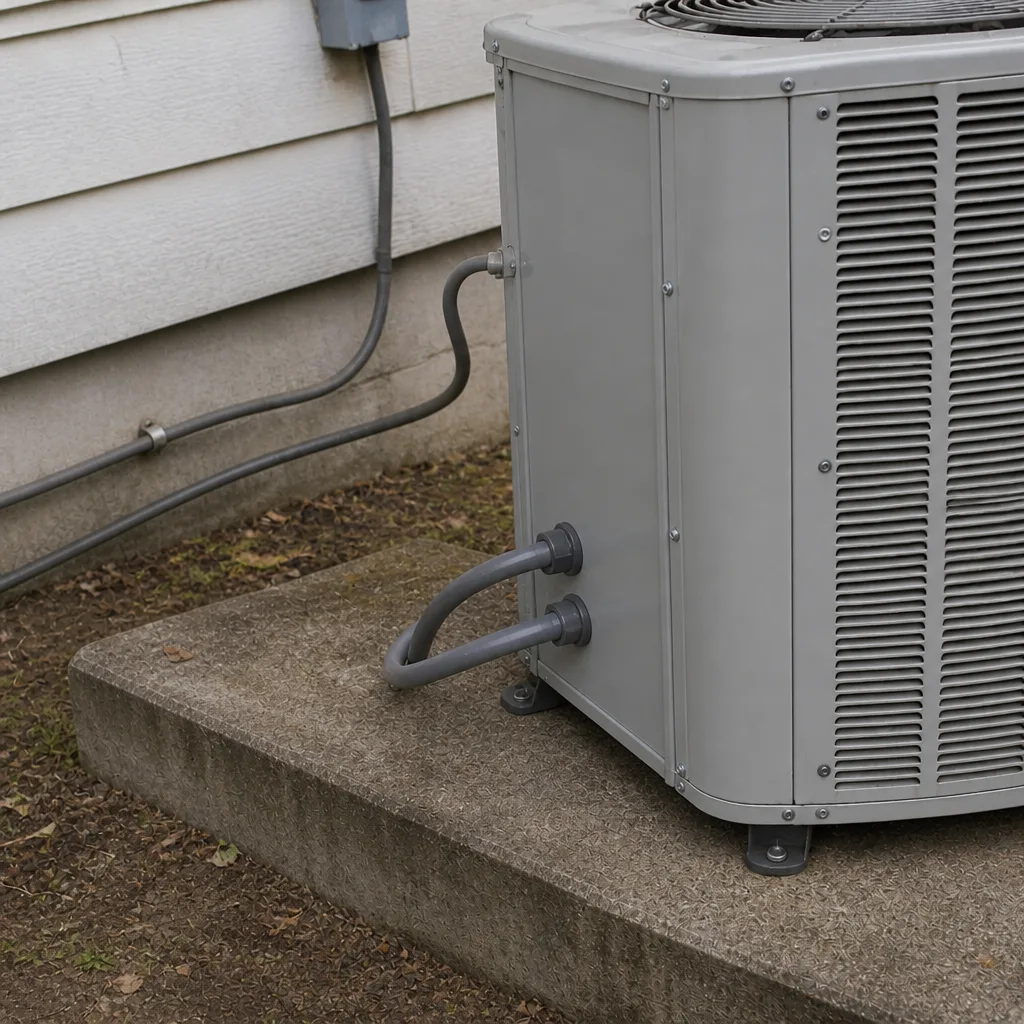 After
When to Call a Professional
Some situations clearly call for a licensed technician. If your existing system is over 15 years old and repairs are stacking up, if a room that used to cool now doesn’t, if your unit short-cycles or the breaker trips, if there’s water pooling near the air handler, or if the system has never been permitted and inspected, those are all signs to bring someone in. On the installation side, any replacement, any new install, any permit filing, and any rebate application warrant professional handling. Refrigerant lines and electrical connections are not homeowner tasks, and a proper load calculation and duct audit need someone who knows what they’re looking at. AC Repair Sunnyvale offers free estimates in Sunnyvale. Call AC repair in Sunnyvale for a straight assessment, and we’ll tell you whether a repair or a replacement honestly makes sense.
Frequently Asked Questions
Most standard residential replacements take a single day. Homes with significant ductwork corrections, upgrades to the electrical disconnect, or more complex attic access may take two. The written estimate should lay out the scope, so you know what the day looks like before anyone arrives. Call (833) 573-8799 for an exact quote. Estimates are free.
Yes, installation requires a permit through the City’s Building Division. Final inspection covers the electrical disconnect, clearances, condensate management, and system match-up. Any contractor who quotes you a price without the permit included is shifting risk to you. Ask for it in the written proposal, and call (833) 573-8799 if you want to talk through the process before you commit.
Yes, qualifying equipment can be eligible for both PG&E rebates and TECH Clean California incentives in 2026. Eligibility depends on the specific model’s efficiency tier, not the brand, so check the model number against the current lists. Properly permitted and documented installation is part of qualifying. Call (833) 573-8799 to go over which tiers apply to your home. Estimates are free.
The right size comes from a room-by-room Manual J load calculation, not a square-footage chart. In Sunnyvale’s mild climate, homes here routinely need 10 – 15% less capacity than national rule-of-thumb charts suggest, and getting that right is what prevents short cycling and uneven cooling. Ask for the calculation in writing. Call (833) 573-8799 to have one done for your house.
If the system is over 15 years old, has had multiple repairs in recent seasons, or uses refrigerant that’s becoming hard to source, replacement generally makes more sense than another repair. If it’s younger and cooling well, repair is usually the right call. A proper diagnostic tells you which side of that line you’re on. Call (833) 573-8799 for an honest read. Estimates are free.
Not always, but you should have it audited before the new unit goes in. Leaky or undersized ducts on a 1970s-era Sunnyvale home can waste 20 – 30% of the cooling output before it reaches a room. Sealing and correcting the return is often enough, and it’s cheaper done alongside the installation than as a separate project later. Call (833) 573-8799 to have the ducts checked first.
The Bottom Line
The most important decisions in a Sunnyvale AC installation happen before anyone touches equipment. A room-by-room Manual J load calculation prevents oversizing, which is the most common and most invisible failure in this mild climate. An honest duct audit before install prevents a new system from throwing away a chunk of its output on leaky 1970s infrastructure. The Sunnyvale permit through the City’s Building Division, and the 2026 PG&E and TECH Clean California rebates, both hinge on documented, inspected work. And the equipment tier (single-stage, two-stage, or variable-speed) should follow your cooling hours, not the sales sheet. Get those four right, and you’ll have a system that fits the house, not one that fights it. Heating and cooling covered, one team across nine major brands. If you’d like a free estimate, call (833) 573-8799. We answer 24/7. Fast dispatch from 7am to 7pm, Sunday through Friday.
Written by the team at AC Repair Sunnyvale.